How Are AI Data Centers Built? 7 Steps, $17.6 Million per Megawatt and a 4-Year Wait for Power (Oct. 2026)
AI data centers are built power-first: as of October 2026, JLL’s research puts the average build of a 50-megawatt data center at 18 months, but the wait for a grid connection in major US markets at more than four years, and Cushman & Wakefield puts the all-in cost at $17.6 million per megawatt before a single chip is bought. The building is the easy part. Finding electricity, cooling racks that draw ten times what old ones did, and wiring hundreds of thousands of chips into one machine are the hard parts.
What we read, October 2, 2026
- Government: Lawrence Berkeley National Laboratory’s June 2026 data center energy update, the Congressional Research Service’s August 2025 FAQ and the Energy Department’s data center design guide.
- Industry research: JLL’s 2026 Global Data Center Outlook, Cushman & Wakefield’s 2026 cost guide and Uptime Institute’s 2026 survey of more than 800 operators.
- Builders: Microsoft’s posts on its Fairwater sites, Meta’s Louisiana updates, an Oracle fact sheet on Stargate Abilene and NVIDIA’s product pages.
An AI assistant helped draft this piece and run the page reads; every quote was read on the source’s own page on the date shown.
This is part 1 of our six-part guide to AI data centers.
The complete guide answers 51 questions in one place. The rest of the series covers power, GPUs, memory and water, where they are being built, Musk’s plan for space, local communities and Big Tech, rules and the outlook.
How are AI data centers built, step by step?
Most projects follow seven steps: secure power, buy and rezone land, join the grid queue, build the shell, install power and cooling, wire the network, then test and switch on. JLL’s January 2026 outlook names the first priority directly: “Speed to power is the primary criteria driving site selection, followed by community support, latency and proximity to customers.”
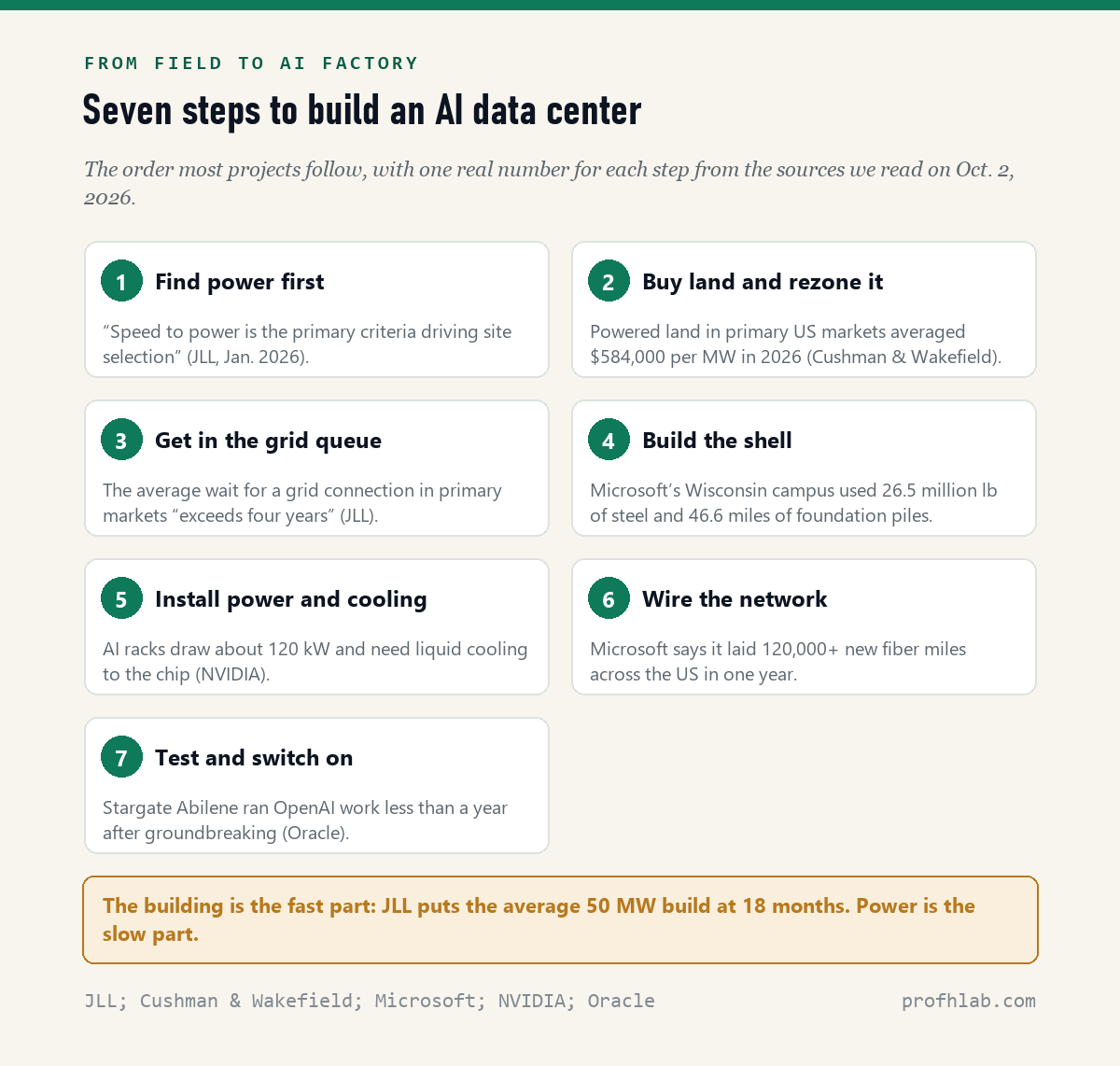
Each step is explained below with the real numbers we found. If you want to see where these campuses are actually landing, our state-by-state map covers that.
Why do we need AI data centers all of a sudden?
Because AI use exploded and AI chips need far more power than ordinary servers: ChatGPT users sent 18 billion messages a week by July 2025, according to a study by OpenAI and Harvard economists, and Lawrence Berkeley National Laboratory found AI server electricity in the US rose from under 2 terawatt-hours in 2017 to more than 40 in 2023. The user count kept climbing, to 900 million weekly users by February 2026, TechCrunch reported.
There are two jobs inside an AI data center. Training is teaching a model by feeding it huge amounts of data; Berkeley Lab assumes training servers run at 80% of capacity on average. Inference is answering your questions with a trained model, which is burstier. JLL expects inference to overtake training as the main AI workload in 2027.
Each answer is small. Google measured the median text prompt to its Gemini apps at 0.24 watt-hours in August 2025, which it compared to “watching TV for less than nine seconds.” Multiply small by hundreds of millions of people, all day, and you get the demand curve behind this series. Our post on how much power an AI data center uses does the full math.
What is the difference between a data center and an AI data center?
Mostly power per rack and how the heat is removed: the typical rack in Uptime Institute’s 2026 survey draws about 11 kilowatts, while one NVIDIA GB200 NVL72 AI rack, with 72 GPUs and 36 CPUs, draws about 120 kilowatts and must be cooled with liquid. Microsoft says its Fairwater racks run at about 140 kW each, and NVIDIA’s roadmap calls for “1 MW IT racks and beyond, starting in 2027.”
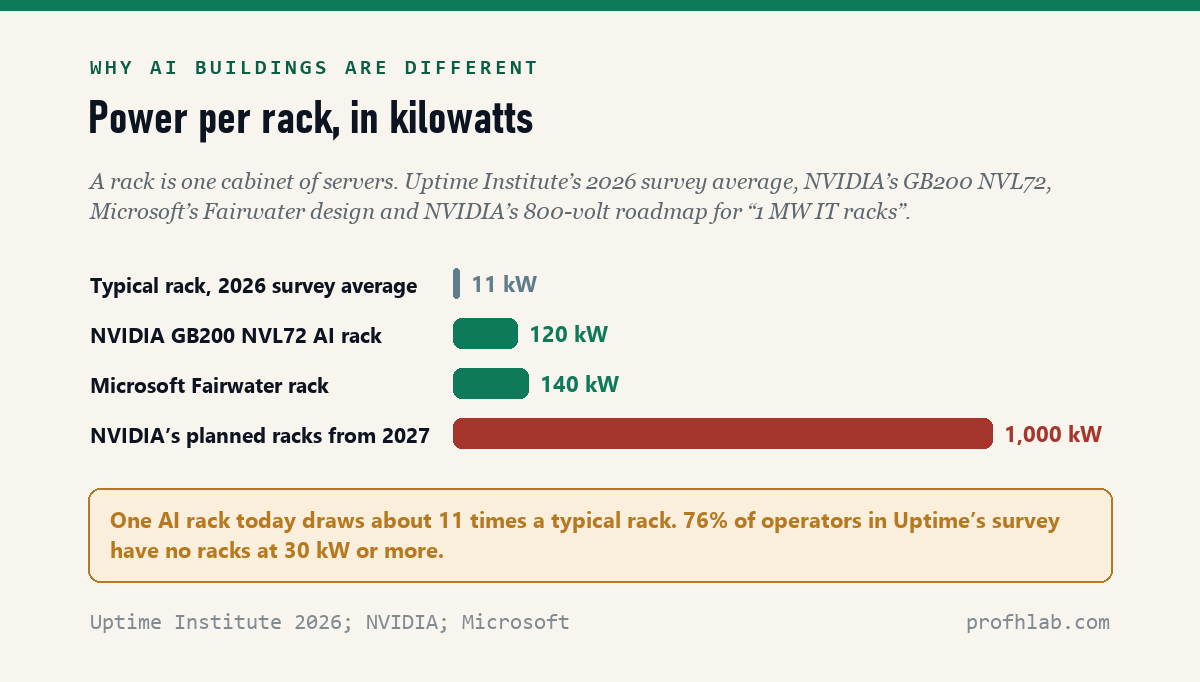
A data center, in the Congressional Research Service’s simplest words, “is a physical facility that houses and runs large computer systems.” An AI data center is the same idea built around accelerator chips, usually GPUs or custom chips like Google’s TPUs, packed so tightly that air alone cannot carry the heat away. NVIDIA calls them “AI factories” whose product is AI output, or tokens. That is a vendor’s term, but it has stuck.
Three kinds of owners build them. Hyperscale sites belong to companies running internet services at massive scale. Colocation sites are rented out by landlords. Neoclouds such as CoreWeave, Lambda and Nebius rent out GPU servers; Uptime found an equivalent GPU server cost $34 an hour from a neocloud against $98 from a hyperscaler in early 2025.
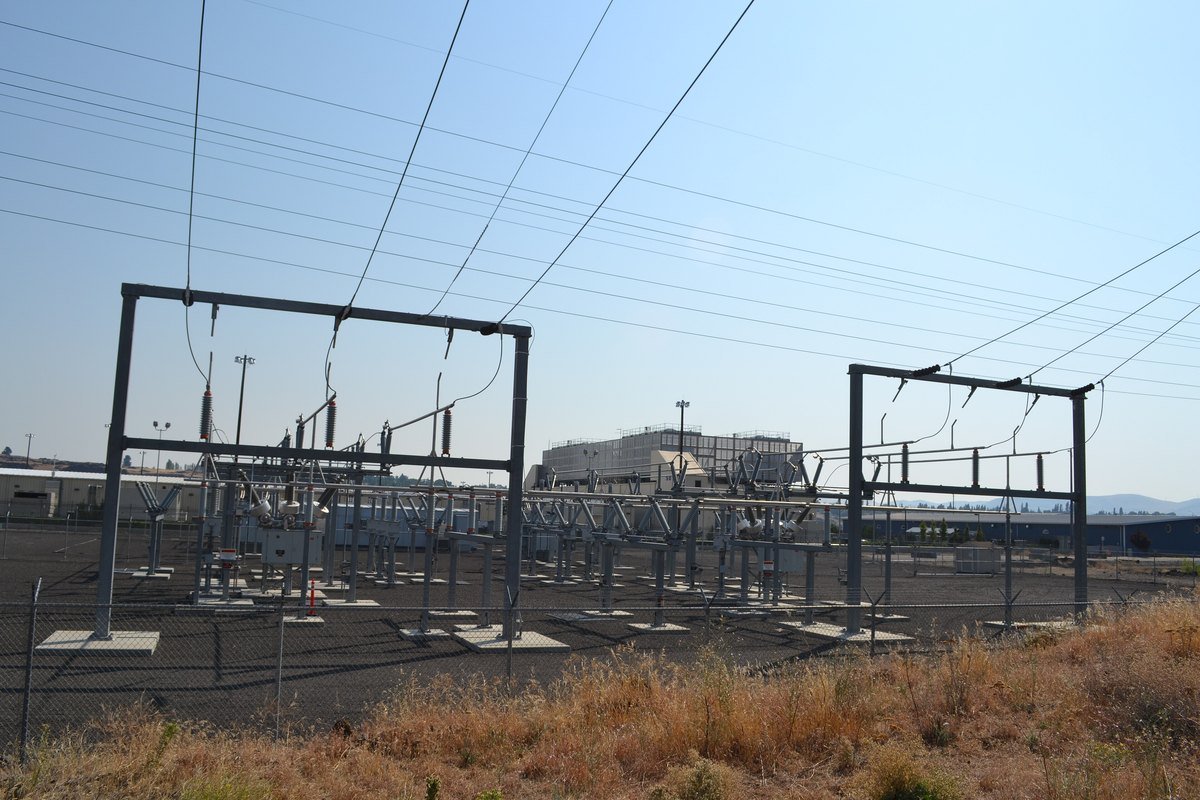
Why is electricity the first thing AI data center builders look for?
Because it is the slowest thing to get: JLL found that “the average wait time for a grid connection in primary data center markets exceeds four years,” far longer than the 18 months it takes to build the building. Cushman & Wakefield adds that grid power is “increasingly scarce in primary markets, pushing land acquisition into secondary and tertiary markets.”
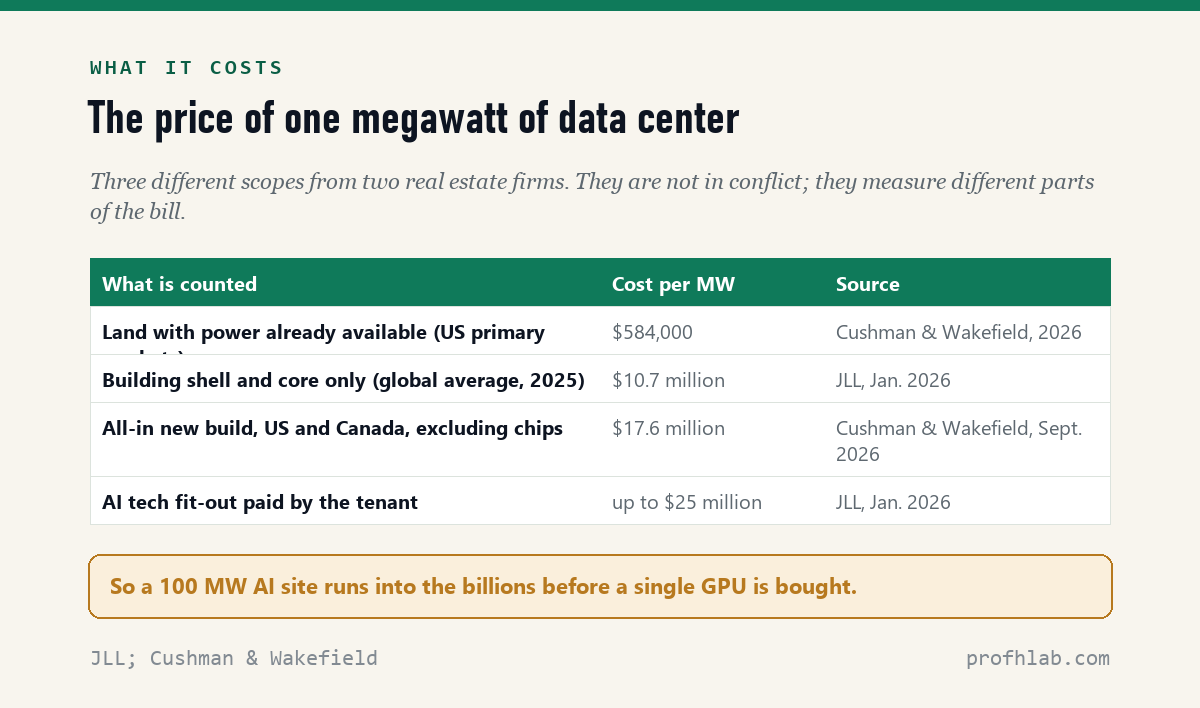
Land with power already available is priced by the megawatt. Cushman & Wakefield reported in September 2026 that powered land in primary US markets averaged $584,000 per megawatt so far in 2026. The campuses are huge: Microsoft’s Wisconsin site covers 315 acres, Stargate Abilene 1,100 acres, and Meta’s Louisiana campus sits on a 2,250-acre former farm site.
Washington is trying to shorten the queue. On October 23, 2025, Energy Secretary Chris Wright directed the Federal Energy Regulatory Commission to start a rulemaking that would “significantly reduce study times and grid upgrade costs” for large loads. Some builders do not wait: the Oracle fact sheet says Abilene uses gas turbines for backup “rather than traditional, higher-emission diesel generators,” and two other Stargate sites plan on-site gas power.
What goes into building the shell of an AI data center?
More concrete, steel and cable than most people imagine: Microsoft says its Fairwater campus in Wisconsin required 46.6 miles of deep foundation piles, 26.5 million pounds of structural steel, 120 miles of medium-voltage underground cable and 72.6 miles of mechanical piping. That campus has three buildings totaling 1.2 million square feet.
The layout is designed around cable length. In its Atlanta site, Microsoft uses a two-story design that “allows for placement of racks in three dimensions to minimize cable lengths, which in turn improves latency, bandwidth, reliability and cost.” Shorter cables mean the chips can act more like one computer.
Stargate Abilene shows the speed when everything lines up. Oracle’s fact sheet says the campus has “eight buildings on 1,100 acres, with up to approximately 4 million square feet,” and that “OpenAI workloads went live less than a year after construction broke ground.” More than 6,400 construction workers were on site every day at the time, the company said.
How are AI data centers cooled?
With liquid, increasingly brought right to the chip: NVIDIA notes that to air-cool today’s AI racks, “data center air would need to be either cooled to below-freezing temperatures or flow at near-gale speeds to carry the heat away.” There are three main methods, and the Energy Department’s design guide defines each.
| Method | How it works | Trade-off |
|---|---|---|
| Air cooling | Fans push chilled air through the servers | Fine near 11 kW per rack; runs out of room well before 120 kW |
| Direct-to-chip liquid | “cold plates that have liquid flowing through channels” sit on each chip | The standard for GB200-class racks; needs plumbing in every rack |
| Immersion | Servers sit in a tank of “dielectric fluid (nonconductive)” | Servicing often needs “a crane or two-man lift” (ASHRAE) |
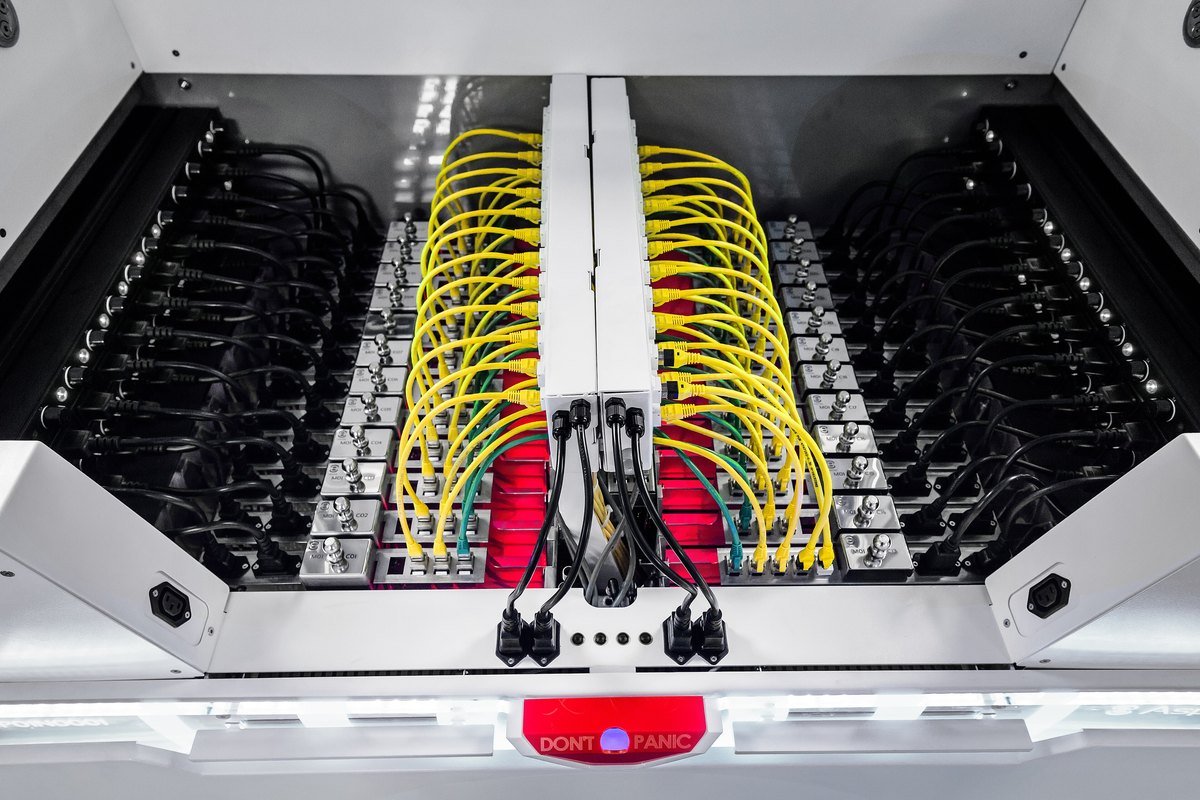
Liquid cooling does not have to mean heavy water use. Microsoft says over 90% of its Fairwater capacity uses a closed loop, “requiring water only once during construction and continually reusing it with no evaporation losses.” For its Atlanta site, Microsoft said the initial fill equals what 20 homes use in a year. Oracle estimated Abilene’s cooling maintenance at about 12,625 gallons per building per year.
What is inside an AI data center?
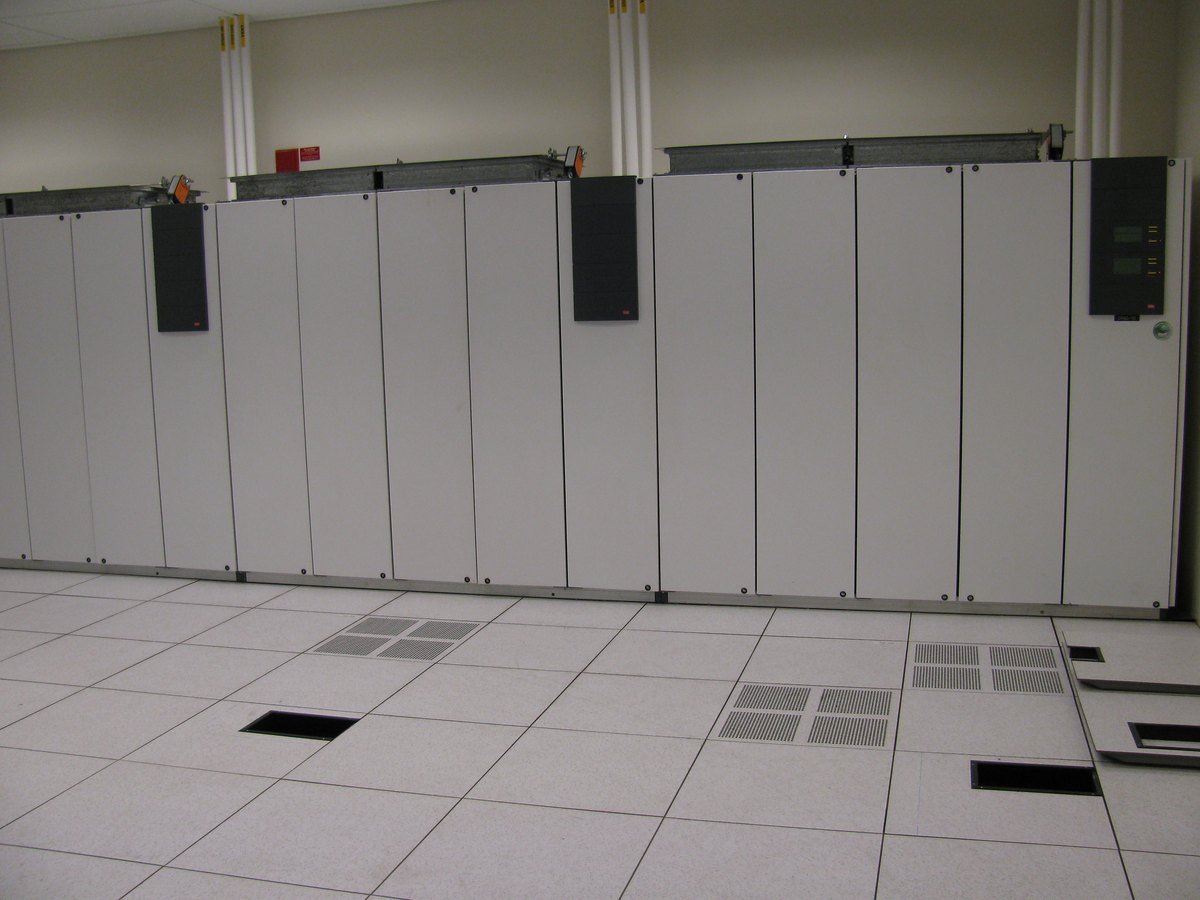
Five systems: the computers (GPU and CPU servers), storage, the network that ties them together, the power chain from the utility to each rack, and the cooling plant. The Energy Department’s guide lists the power path as “the utility service, switchboard, switchgear, alternate power sources (i.e. backup generator), paralleling equipment for redundancy (i.e., multiple UPSs and PDUs).”
Most of the electricity goes to the computers. The International Energy Agency estimates servers use about 60% of a modern data center’s power, cooling from about 7% at efficient hyperscale sites to over 30% at less efficient ones, storage about 5% and networking up to 5%. Berkeley Lab found all infrastructure, including cooling and power losses, fell from 36% of US data center electricity in 2018 to 31% in 2024.
Inside one rack, the network is what makes 72 GPUs act as one. NVIDIA’s NVLink gives each GPU 1.8 terabytes per second of bandwidth, 130 TB/s across a GB200 NVL72 rack. Between racks and buildings, fiber does the work: Microsoft says it “delivered over 120,000 new fiber miles across the US last year” to link its sites into one “AI superfactory.”
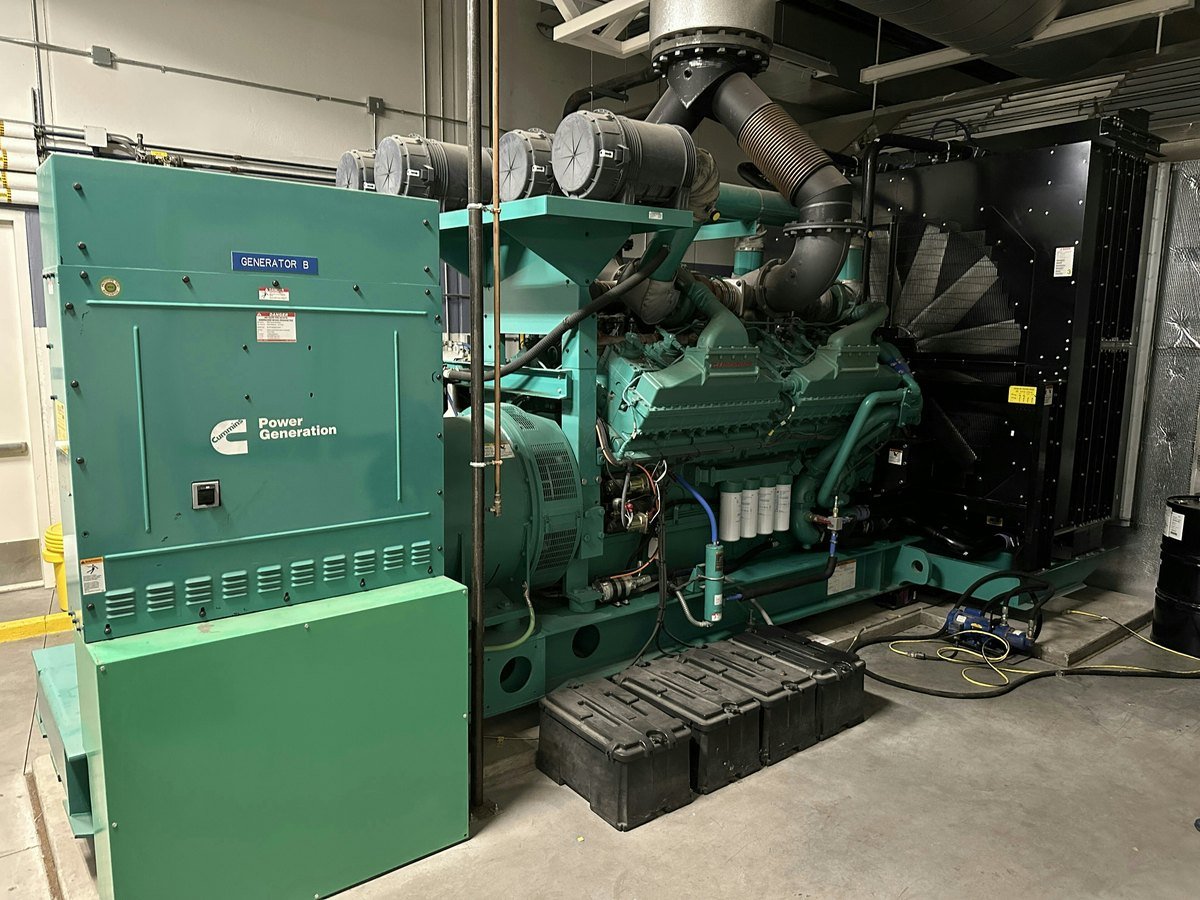
One surprise: some AI sites skip the classic backup gear. For its Atlanta Fairwater site, Microsoft relies on very reliable grid power and said “we can also forgo traditional resiliency approaches for the GPU fleet (such as on-site generation, UPS systems and dual-corded distribution).” Ordinary data centers almost always keep generators.
How much does it cost to build an AI data center?
About $17.6 million per megawatt for an all-in new build in the US and Canada before chips, according to Cushman & Wakefield’s September 2026 cost guide, up 21% since late 2024. JLL’s narrower figure for the building shell and core was $10.7 million per megawatt worldwide in 2025, and it says the AI fit-out paid by the tenant “can cost as much as $25 million per MW.”
Real projects show how fast the bill grows. Louisiana announced Meta’s Richland Parish campus as a $10 billion investment in December 2024. In October 2025, Meta’s joint venture with funds managed by Blue Owl Capital valued the buildings and long-lived infrastructure at about $27 billion. In July 2026, Meta put its total investment there at “more than $50 billion.”
Then come the chips. NVIDIA publishes no list price, but CEO Jensen Huang told CNBC in March 2024 that Blackwell GPUs would cost $30,000 to $40,000 each. At that price, the roughly 60,000 GPUs that fit in 100 MW of racks would cost about $1.8 billion to $2.4 billion. That last figure is our arithmetic from the quoted range, not a vendor quote.
How long does it take to build an AI data center?
About 18 months for the building, by JLL’s global average for a 50 MW facility, but often years longer once power and permits are counted. JLL found 57% of projects had delays of three months or more in 2025, and US equipment lead times were 42 weeks, 83% above 2019.
The fastest verified case we found was Stargate Abilene: OpenAI work went live less than a year after groundbreaking, per Oracle. The slow cases are usually stuck on power or zoning, not construction. Our local communities post covers the zoning fights, and our US map covers projects that paused or ended.
Who builds AI data centers, and how many jobs do they create?
Thousands of construction workers and a few hundred permanent staff at the largest sites: Meta expected a peak of 5,000 construction workers in Louisiana and “more than 500 operational jobs like electricians, HVAC specialists, server and network techs.” Skilled trades are the bottleneck. Cushman & Wakefield cites shortages in “mechanical, electrical, and plumbing trades,” and more than half of Uptime’s operators reported trouble finding qualified candidates in 2026.
That shortage is an opening for career changers. Our guides cover how to become a data center technician with no experience, how much AI data center electricians make and xAI’s Memphis jobs. Live openings are on our jobs board.
How long, how much and how they stay cool, plus the jargon
What is an AI data center?
A building full of computers built around AI chips such as GPUs, packed so densely that they need liquid cooling and huge amounts of power. One NVIDIA GB200 NVL72 rack holds 72 GPUs and draws about 120 kW, against about 11 kW for a typical rack.
Why do we need more AI data centers?
Because AI use grew fast: ChatGPT reached 900 million weekly users by February 2026, and Berkeley Lab found US AI server electricity rose from under 2 TWh in 2017 to more than 40 TWh in 2023.
What is the difference between a regular data center and an AI data center?
Power density and cooling. A typical rack draws about 11 kW in Uptime Institute’s 2026 survey; an AI rack draws about 120 kW and needs liquid cooled plates on every chip.
How long does it take to build an AI data center?
About 18 months for a 50 MW building, by JLL’s global average. Getting a grid connection in major US markets takes more than four years on average, and the fastest case we verified, Stargate Abilene, ran AI work less than a year after groundbreaking.
How much does it cost to build an AI data center?
About $17.6 million per megawatt all-in for a new US or Canadian site, before chips, per Cushman & Wakefield in September 2026. The AI equipment fit-out can add up to $25 million per megawatt, per JLL.
What are AI data centers made of?
Mostly concrete, steel, copper and pipe. Microsoft’s Wisconsin campus used 26.5 million pounds of structural steel, 46.6 miles of foundation piles, 120 miles of underground cable and 72.6 miles of mechanical piping.
How are AI data centers cooled?
Mostly with liquid. Direct-to-chip systems run liquid through cold plates on each chip; immersion systems sink servers in non-conductive fluid. Air cooling alone cannot handle 120 kW racks.
Do AI data centers need backup generators?
Most do, usually diesel. Some new AI sites differ: Abilene uses gas turbines for backup, and Microsoft’s Atlanta Fairwater site skips generators and UPS systems for its GPUs, relying on very reliable grid power.
What is a hyperscale data center?
One run by a company providing internet services at massive scale. An industry rule of thumb cited by the Congressional Research Service is at least 5,000 servers, 10,000 square feet and a power rating above 100 MW.
What is a neocloud?
A newer cloud company that mainly rents out GPU servers for AI, such as CoreWeave, Lambda or Nebius. Synergy Research put neocloud revenue at $9 billion in the fourth quarter of 2025, up 223% from a year earlier.
What is an AI factory?
NVIDIA’s name for a data center whose main product is AI output. NVIDIA says AI factories “manufacture intelligence at scale,” measured in token throughput. It is a vendor’s marketing term.
How many people work at an AI data center?
Thousands while it is built, hundreds after. Meta expected 5,000 construction workers at peak in Louisiana and more than 500 permanent operations jobs.
No primary source on commissioning, so we skip that step
Cost and timing figures come from JLL and Cushman & Wakefield, two commercial real estate firms; their scopes differ, and we label each. Company facts come from the companies’ own posts, labeled as company figures. Berkeley Lab and Uptime Institute supply the energy and rack data.
We did not find a primary source describing the commissioning steps that end a build, such as integrated systems testing, so we do not describe them in detail. We also left out several widely repeated figures we saw only in search snippets, including a permanent job count for Abilene.
Where to read about power draw, HBM and data center hiring
The complete guide to AI data centers answers 51 questions in one place. For numbers on power, GPUs and memory, read how much power an AI data center uses. For the chips themselves, see what comes after HBM and Physical AI explained, or browse the Physical AI library. Daily hiring counts at these companies are on the AI jobs tracker.
Cite this
As of October 2026, an average 50 MW data center takes about 18 months to build but more than four years to get a grid connection in major US markets (JLL), costs about $17.6 million per megawatt before chips (Cushman & Wakefield), and AI racks draw about 120 kW against 11 kW for a typical rack (NVIDIA; Uptime Institute). Source: profhlab.com, How Are AI Data Centers Built?
Sources read on October 2, 2026: JLL 2026 Global Data Center Outlook; Cushman & Wakefield Data Center Development Cost Guide, 2026; Uptime Institute Global Data Center Survey 2026; LBNL, US Data Center Energy Usage Report: 2025 Update, June 2026; Congressional Research Service R48646, August 26, 2025; DOE Best Practices Guide for Energy-Efficient Data Center Design, July 2024.
Also read on October 2, 2026: Microsoft, September 18, 2025; Microsoft, November 12, 2025; Meta, December 19, 2025; Oracle fact sheet on Stargate, September 23, 2025; NVIDIA, April 22, 2025; NBER Working Paper 34255, September 2025; Google Cloud, August 22, 2025; DOE, October 23, 2025; Uptime Institute Journal, February 26, 2025. Photos via Wikimedia Commons under the licenses shown.
Prof.’s H Newsletter
One short email a month, with the numbers in it
What actually moved in AI hiring, AI prices, and the scams aimed at older Americans. Counted here, dated, and linked to the source. One email a month, and your address goes nowhere else.