What Is an AI Data Center? The Complete 2026 Guide in 51 Questions
An AI data center is a building full of computers built around AI chips, usually GPUs, that trains AI models and answers people’s questions; as of October 2026, one of its server racks draws about 120 kilowatts, roughly 11 times a typical rack, and US data centers as a whole used 4.7% of the nation’s electricity in 2024. This guide answers 51 questions about them in plain English, each with a named source, and links to six deep dives.
How this guide was built, October 2, 2026
- We read more than 150 primary sources for the six-part series: federal lab reports, SEC filings, state audits, utility regulators, company engineering posts and peer-reviewed or industry research.
- Key figures were re-checked on the original page or PDF, including Lawrence Berkeley National Laboratory’s June 2026 report, SpaceX’s SEC filing and the companies’ capital spending lines.
- Anything we could not confirm on a primary page is left out. Our own arithmetic is labeled as ours.
An AI assistant helped draft this guide and run the page reads; every quote was read on the source’s own page on the date shown.
What is an AI data center, in plain English?
It is a data center built for AI chips: the Congressional Research Service defines a data center as “a physical facility that houses and runs large computer systems,” and an AI data center packs those computers so densely with GPUs that it needs liquid cooling and, at the largest sites, as much power as a city. The first eight questions cover the basics.
What is an AI data center?
A building of servers built around AI accelerator chips, usually NVIDIA GPUs or custom chips such as Google’s TPUs, wired together so thousands of chips work as one machine. One NVIDIA GB200 NVL72 rack holds 72 GPUs and 36 CPUs and draws about 120 kW, according to NVIDIA.
What is an AI data center used for?
Two jobs. Training teaches an AI model by feeding it huge amounts of data. Inference runs the trained model to answer requests, such as a ChatGPT reply. JLL expects inference to overtake training as the main AI workload in 2027.
How does an AI data center work?
Electricity comes in through a substation, flows through switchgear and backup systems to each rack, powers the chips, and becomes heat that liquid cooling carries away. Fast links such as NVIDIA’s NVLink, at 1.8 terabytes per second per GPU, let the chips share work. Our building guide walks through each part.
What is the difference between a data center and an AI data center?
Power density and cooling. The typical rack in Uptime Institute’s 2026 survey draws about 11 kW; an AI rack draws about 120 kW (NVIDIA) to 140 kW (Microsoft’s Fairwater design). At that density, air cooling stops working and liquid has to reach the chips.
What is a hyperscale data center?
One run by a company that provides internet services at massive scale, such as Amazon, Microsoft, Google or Meta. An industry rule of thumb cited by the Congressional Research Service is at least 5,000 servers, 10,000 square feet and a power rating above 100 MW.
What is a neocloud?
A newer cloud company that mainly rents out GPU servers, such as CoreWeave, Lambda or Nebius. Synergy Research put neocloud revenue at $9 billion in the fourth quarter of 2025, up 223% from a year earlier.
What is an AI factory?
NVIDIA’s name for an AI data center whose product is AI output, measured in tokens. NVIDIA says AI factories “manufacture intelligence at scale.” It is a vendor’s marketing term that has become common.
What is an AI data center and why is it bad?
It is not bad in itself, but it can be a bad neighbor if the deal is weak. In August 2026, Pew found 54% of Americans saw data centers as mostly bad for the environment and 50% for home energy costs. Our local communities guide weighs both sides.
Why do we suddenly need so many AI data centers?
Because AI use grew faster than almost any technology before it: ChatGPT reached 900 million weekly users by February 2026, TechCrunch reported, and Lawrence Berkeley National Laboratory found US AI server electricity rose from under 2 terawatt-hours in 2017 to more than 40 in 2023.
Why do we need AI data centers all of a sudden?
Because hundreds of millions of people now use AI every week, and both training and answering need specialized chips that ordinary data centers cannot power or cool. ChatGPT users sent 18 billion messages a week by July 2025, according to a study by OpenAI and Harvard economists.
What is the difference between AI training and inference?
Training builds the model and runs chips flat out; Berkeley Lab assumes training servers average 80% utilization. Inference answers user requests and is burstier. The lab calls inference power its biggest forecast uncertainty: a high-inference scenario adds more than 20% to 2030 demand.
How much energy does one AI chatbot answer use?
Google measured the median text prompt to its Gemini apps at 0.24 watt-hours in August 2025, equivalent, it said, to “watching TV for less than nine seconds.” That figure is company-measured and covers text prompts only.
Is demand for AI computing still growing?
Yes, by every company’s account. Amazon CEO Andy Jassy said in July 2026 that even at about $220 billion of 2026 spending, “we will still not have enough capacity to meet all the demand,” and expects the same in 2027.
How are AI data centers built, and what do they cost?
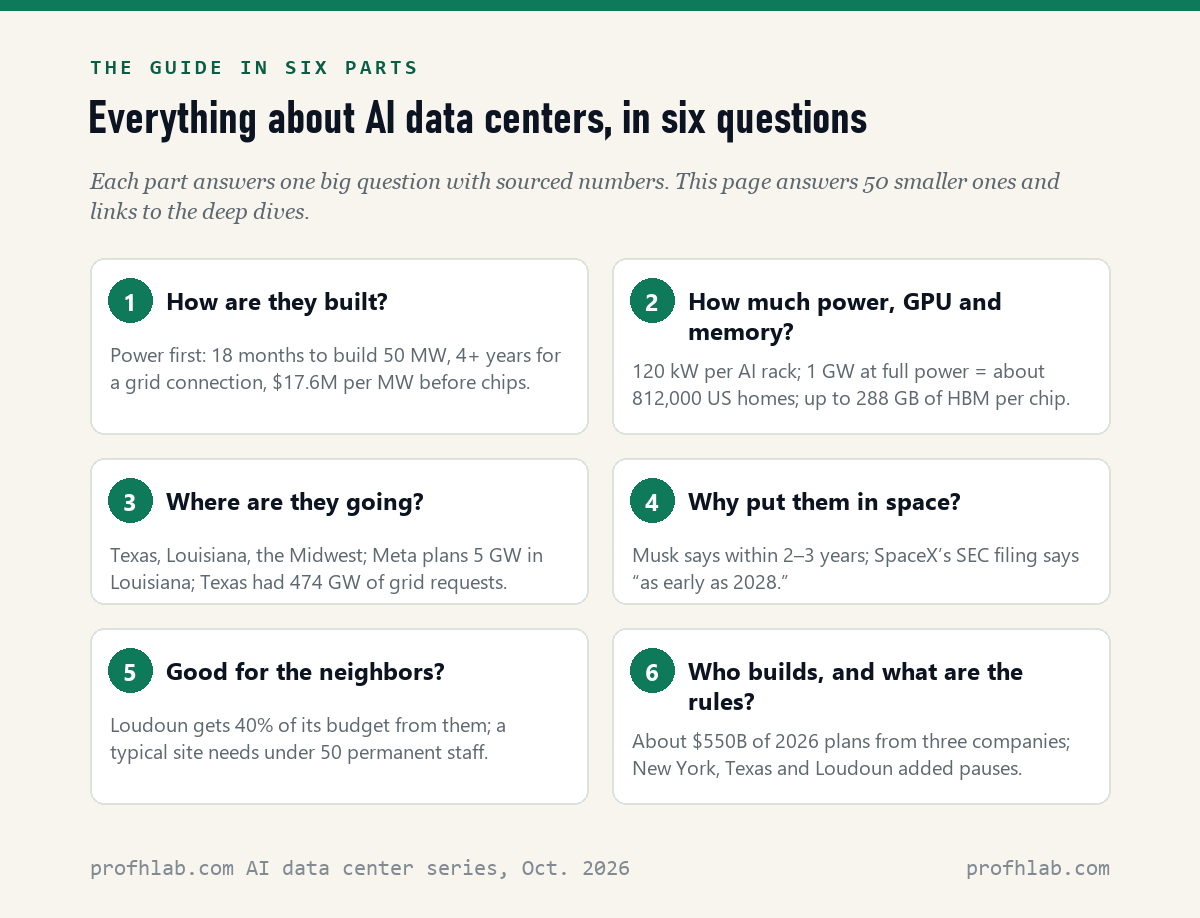
Power-first, slowly, and at great expense: JLL puts the average build of a 50 MW data center at 18 months but the wait for a grid connection in major US markets at more than four years, and Cushman & Wakefield puts the all-in cost at $17.6 million per megawatt before chips. Full detail is in how AI data centers are built.
How are AI data centers built?
In seven steps: secure power, buy and rezone land, join the grid queue, build the shell, install power and cooling, wire the network, then test and switch on. JLL says “Speed to power is the primary criteria driving site selection.”
How long does it take to build an AI data center?
About 18 months for a 50 MW building on JLL’s global average, but more than four years to get grid power in major markets. The fastest case we verified, Stargate Abilene, ran OpenAI work less than a year after groundbreaking, according to Oracle.
How much does an AI data center cost?
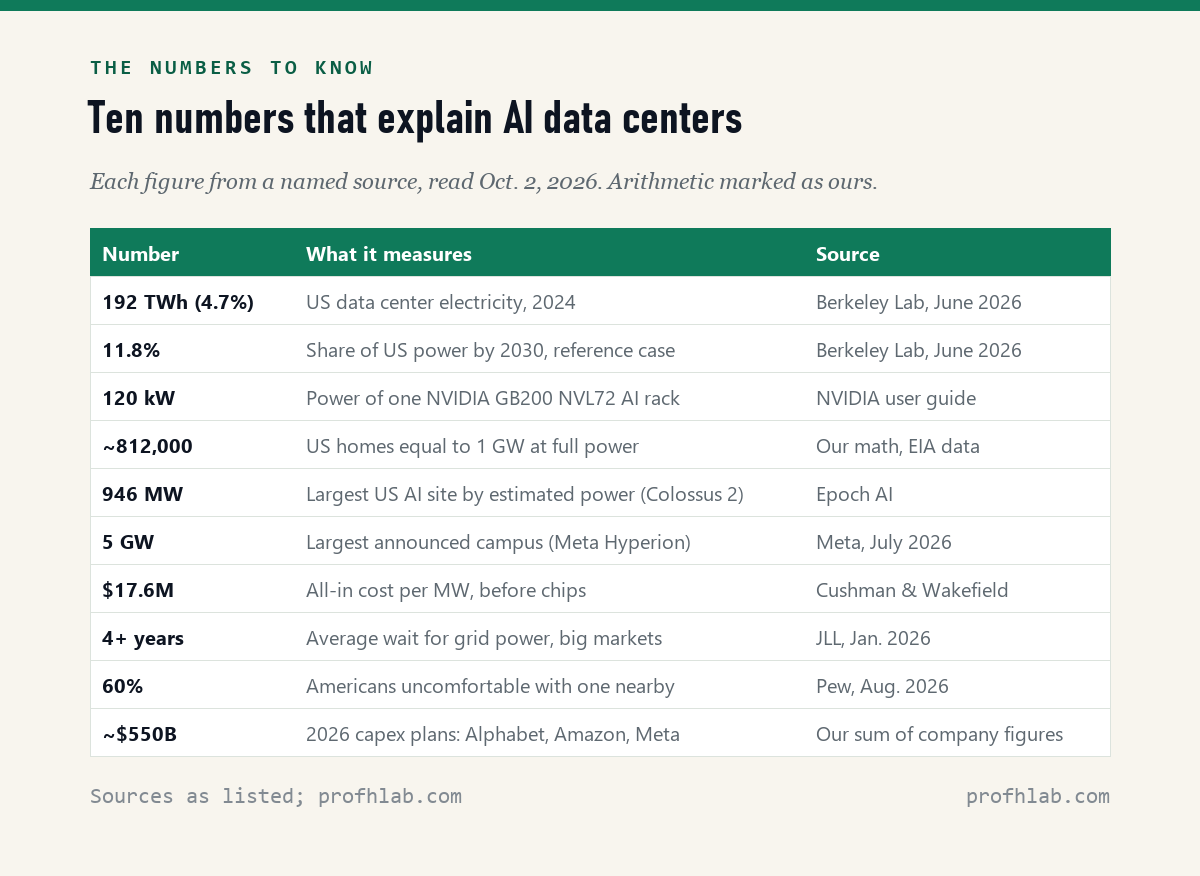
About $17.6 million per megawatt all-in for a new US or Canadian site, excluding chips (Cushman & Wakefield, September 2026). JLL says the AI equipment fit-out can add up to $25 million per megawatt, and Blackwell GPUs cost $30,000 to $40,000 each, per NVIDIA’s CEO.
What are AI data centers made of?
Concrete, steel, copper and pipe. Microsoft’s Wisconsin campus required 46.6 miles of foundation piles, 26.5 million pounds of structural steel, 120 miles of underground cable and 72.6 miles of mechanical piping.
How are AI data centers cooled?
Mostly with liquid. Direct-to-chip systems run liquid through cold plates on each chip; immersion systems sink servers in non-conductive fluid. NVIDIA says air-cooling today’s racks would need air “cooled to below-freezing temperatures or flow at near-gale speeds.”
Do AI data centers need backup generators?
Most keep diesel generators. Some new AI sites differ: Stargate Abilene uses gas turbines for backup, and Microsoft’s Atlanta Fairwater site skips generators and UPS systems for its GPUs, relying on very reliable grid power.
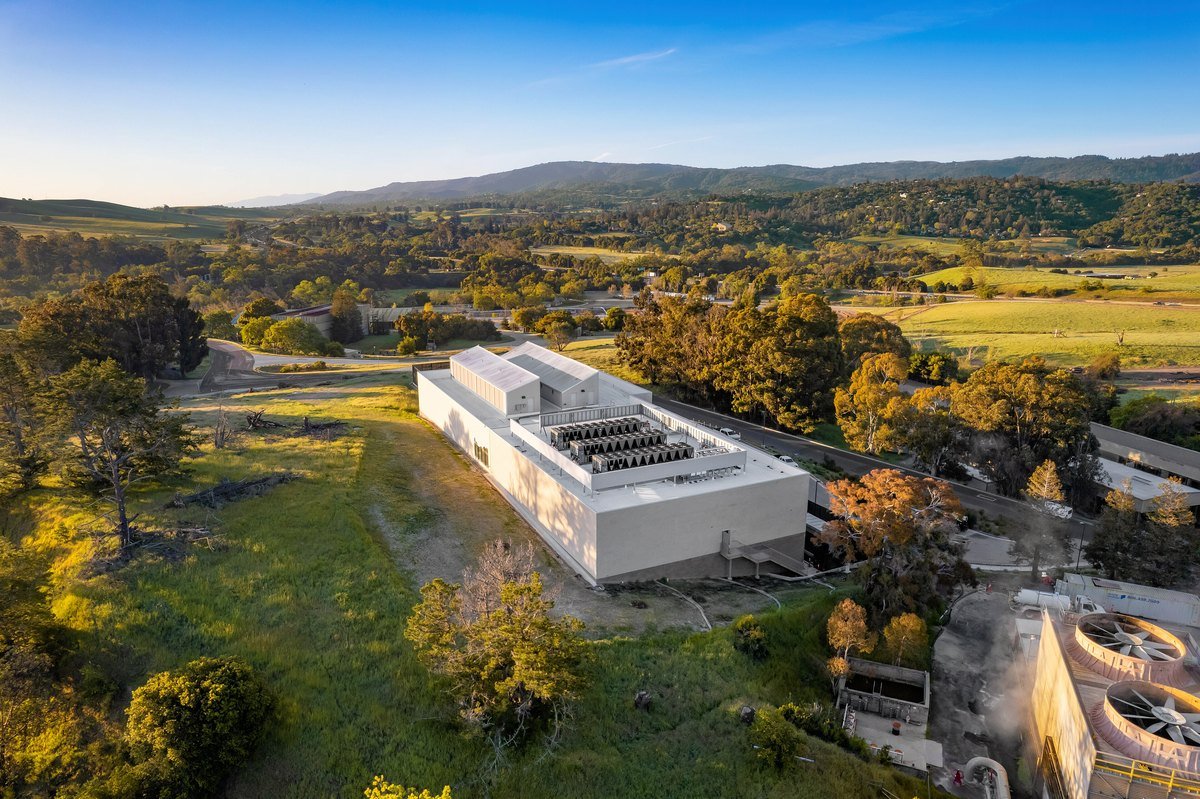
How much power, water and chips do AI data centers need?
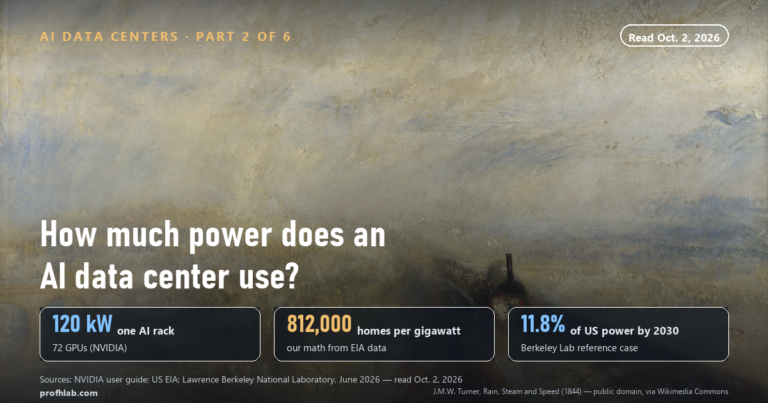
A lot of each: one AI rack draws about 120 kW, a 1 GW campus at full power equals about 812,000 average US homes by our arithmetic from EIA data, and Google’s data centers consumed about 10.5 billion gallons of water in 2025. The numbers are in how much power an AI data center uses.
How much power does an AI data center use?
From about 100 MW for a large building to 1 GW or more for a campus. Epoch AI estimates xAI’s Colossus 2 runs about 946 MW of IT power; the IEA says a typical AI-focused data center uses as much electricity as 100,000 households.
How many homes can 1 gigawatt power?
About 812,000 average US homes if the site drew a full gigawatt all year: 8.76 billion kWh divided by the EIA’s 10,791 kWh per home. It is our arithmetic and an upper bound.
What percentage of US electricity do data centers use?
4.7% in 2024, or 192 TWh, according to Lawrence Berkeley National Laboratory’s June 2026 update. Its reference case reaches 11.8% by 2030, with a range of 9.5% to 15.3%.
How much power does one AI server rack use?
About 120 kW for an NVIDIA GB200 NVL72 rack, per NVIDIA’s user guide. NVIDIA is preparing 800-volt power for 1 MW racks from 2027.
How many GPUs are in an AI data center?
Tens of thousands to hundreds of thousands. xAI’s first Colossus launched with 100,000 NVIDIA Hopper GPUs; Epoch AI estimates Colossus 2 runs about 440,000 Blackwell GPUs.
How much memory does an AI chip need?
Between 80 GB (H100) and 288 GB (Blackwell Ultra and Rubin) of high-bandwidth memory, or HBM, per chip. One GB200 NVL72 rack holds 13.4 TB of HBM3e, according to NVIDIA.
Who makes HBM memory?
SK hynix, Samsung and Micron. In the second quarter of 2026 their shares of HBM revenue were 50%, 33% and 18%, according to Counterpoint Research. SK hynix says demand exceeds what it can supply. See what comes after HBM.
How much water does an AI data center use?
It depends on cooling. Google’s data centers consumed about 10.5 billion gallons in 2025, about 0.25 gallons per kWh by our division; Microsoft says its closed-loop designs since August 2024 use no water for cooling after the first fill.
What is PUE?
Power usage effectiveness: total facility power divided by computer power. Google’s fleet averaged 1.09 in 2025; Uptime Institute’s 2026 industry average was 1.52; Berkeley Lab estimates AI facilities averaged 1.145 in 2024.
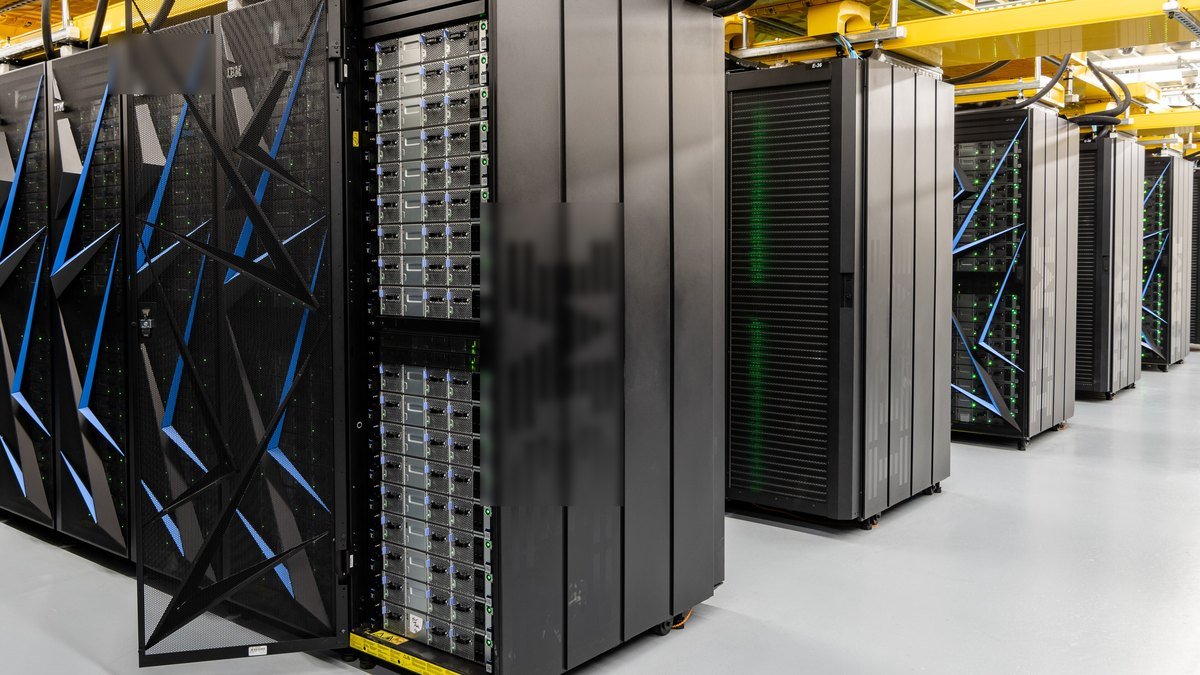
Where are AI data centers being built?
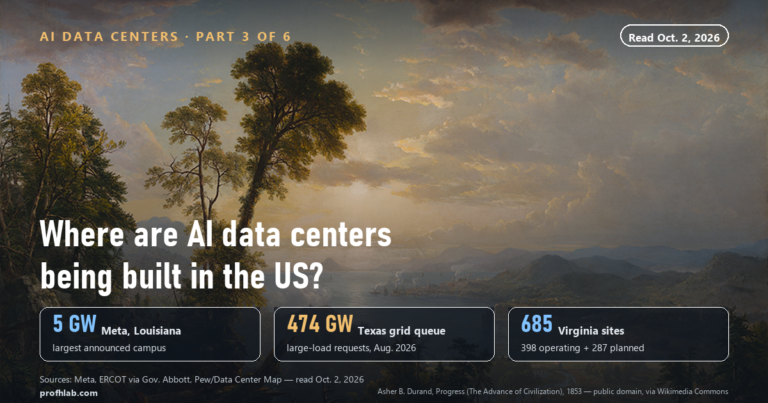
Increasingly in Texas, Louisiana, the Midwest and rural counties: Meta plans 5 GW in Richland Parish, Louisiana, OpenAI’s Stargate has seven US sites, and Pew found 67% of planned US data centers are in rural areas. The full map is in where AI data centers are being built.
How many data centers are in the US?
More than 3,000 operating and more than 1,500 in development, according to Pew Research Center’s April 2026 analysis of Data Center Map. Synergy Research counted 580 giant hyperscale sites at the end of 2025.
Which state has the most data centers?
Virginia, with 398 operating and 287 planned (685 total), ahead of Texas (466) and California (331), per Pew’s count from February 2026 data. Loudoun County alone has 233 data center buildings.
Where is the largest AI data center in the US?
By estimated current power, xAI’s Colossus 2 in Memphis, Tennessee, at about 946 MW (Epoch AI). By announced size, Meta’s Hyperion in Louisiana, planned at 5 GW.
Where are AI data centers being built in the US?
Named giant campuses are in Texas (Abilene, Shackelford, Milam, Armstrong and Haskell counties), Louisiana, New Mexico, Indiana, Ohio, Michigan, Wisconsin, Tennessee, Mississippi and Georgia. Texas had about 474 GW of large-load grid requests by August 2026.
What is Stargate?
OpenAI’s data center build-out with Oracle and SoftBank. SoftBank said in September 2025 it reached “nearly 7 gigawatts of planned capacity and over $400 billion in investment over the next three years”; Epoch AI puts the seven US sites above 9 GW planned.
Why are data centers being built in rural areas?
Because power and big land parcels are easier to get. JLL found 77% of North American capacity under construction in mid-2026 was in “frontier” markets, led by West Texas.
Could AI data centers move to space?
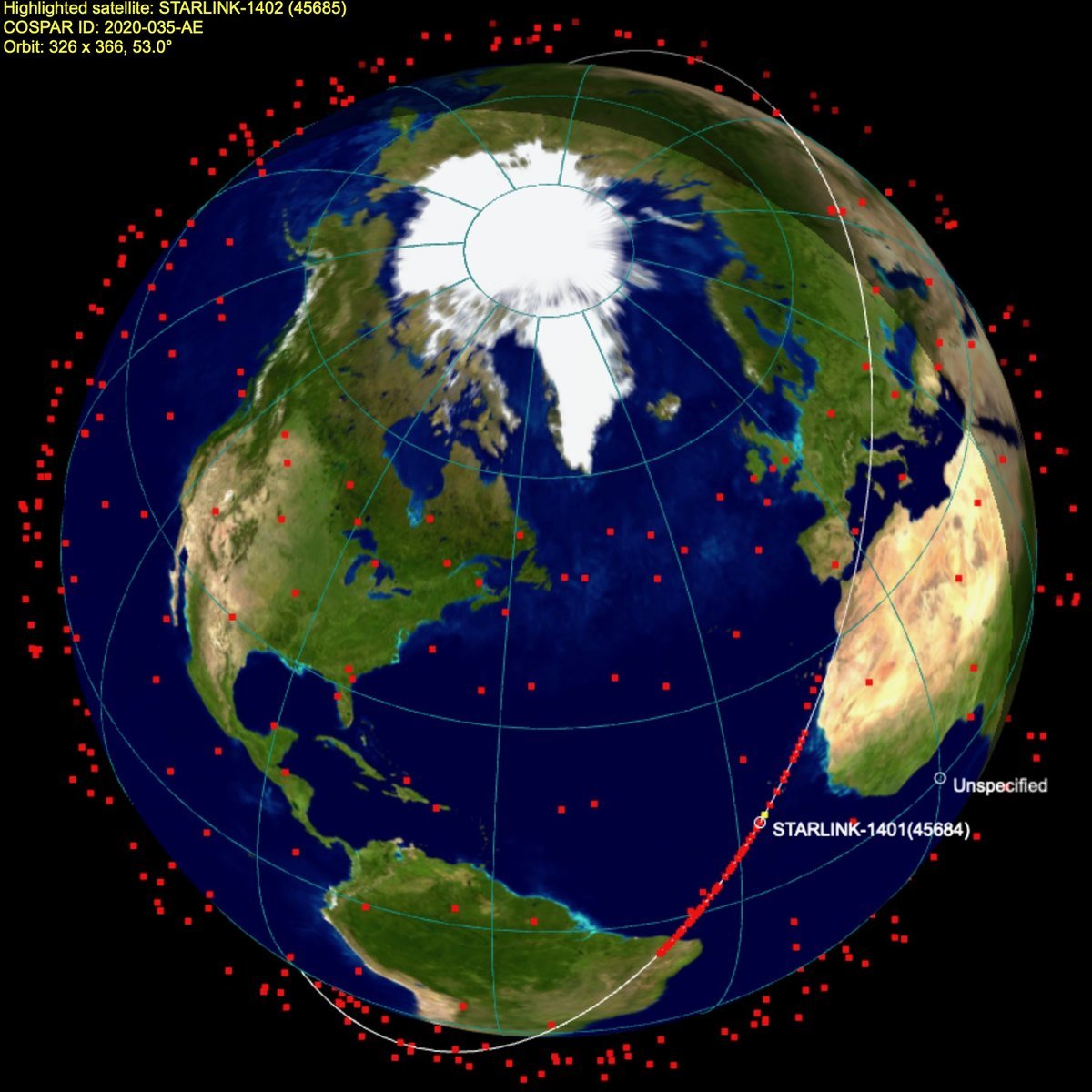
Not soon: Elon Musk said on February 2, 2026 that space will be the cheapest place for AI computing “within 2 to 3 years,” but SpaceX’s own SEC filing of May 20, 2026 says deployment could begin “as early as 2028” and that it “may not achieve commercial viability.” The full analysis is in why Musk wants data centers in space.
Why does Elon Musk want data centers in space?
He argues solar panels produce about five times more energy in orbit and power on Earth keeps getting harder to add. SpaceX acquired his AI company, xAI, in February 2026 and asked the FCC for up to one million data center satellites.
Are data centers in space possible?
Small ones exist: Starcloud ran AI models on one NVIDIA H100 in orbit in December 2025, and Google launched a test satellite with four TPUs on October 1, 2026. Gigawatt-scale ones are unproven.
How do you cool a computer in space?
Only with radiator panels, since there is no air. ABI Research estimates one 40 kW rack needs about 80 square meters of radiator, and says “Free cooling is perhaps the biggest misconception.”
Is computing in space cheaper than on Earth?
Not today. SemiAnalysis estimated $8.64 per GPU-hour in orbit against $2.37 on the ground in June 2026, with parity around 2040 in its base case.
What do AI data centers mean for the people who live near them?
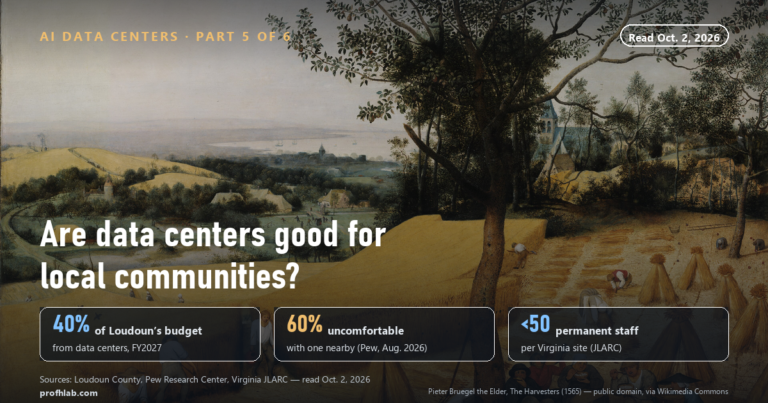
Big tax money and few permanent jobs, plus real risks for water, noise and power bills: Loudoun County, Virginia expects $1.3 billion from data centers in fiscal 2027, 40% of its budget, while Virginia’s legislative auditor found a typical site needs fewer than 50 daily operations staff. See are data centers good for local communities.
Are data centers good for local communities?
Good for the tax base, small for jobs, and risky if the deal is weak. Georgia’s state audit found its data center tax break returned 4% directly but a 289% wider economic return, and that 70% of projects would have come anyway.
Do data centers create jobs?
Mostly during construction. JLARC found up to 1,500 construction workers per Virginia site but fewer than 50 permanent operations staff; Brookings estimates roughly 100 to 200 jobs per host county.
Do data centers pay taxes?
They pay local property taxes, often a lot, but many states exempt their equipment from sales tax. Virginia reported losing $1.6 billion that way in fiscal 2025, and Good Jobs First counted 37 states with such exemptions.
Do AI data centers raise electric bills?
They can, depending on who pays for new power plants and lines. Ohio, Virginia and Georgia regulators now require big new loads to cover more of their own costs. Our post is my electric bill going up because of AI covers it in depth.
Why do people oppose data centers?
Bills, water, noise, property values, lost green space and secrecy. A PBS News/NPR/Marist poll in September 2026 found 65% of registered voters oppose a data center in their own community.
Can a town stop a data center?
Sometimes. Tucson, College Station and Franklin Township, Indiana said no or saw withdrawals, Virginia courts voided the 2,100-acre Digital Gateway rezoning, and at least 100 local moratoria exist. Loudoun County paused new applications for 12 months in September 2026.
Who builds AI data centers, what are the rules, and what comes next?
Five companies lead the spending, governments are pulling in opposite directions, and forecasts disagree on how big it gets: Alphabet, Amazon and Meta alone plan about $545–570 billion of 2026 capital spending by our sum of their figures, while Washington speeds permits and states add pauses. Details are in who is building the most AI data centers.
Who is building the most AI data centers?
By 2026 spending plans, Amazon (about $220 billion), Alphabet ($195–205 billion) and Meta ($130–145 billion), with Microsoft ($115.9 billion in its fiscal 2026) and Oracle close behind. OpenAI, Anthropic and xAI build through partners or their own sites.
How much is being spent on AI data centers?
Alphabet, Amazon and Meta plan about $545–570 billion for 2026, roughly double 2025, by our sum. McKinsey estimated in 2025 that $6.7 trillion will be needed worldwide by 2030.
Is the AI data center boom a bubble?
Not settled. The IMF warned in January 2026 of a possible “abrupt financial market correction” if expectations reset, and named circular deals as a source of opacity. The companies say demand exceeds supply. This is not investment advice.
What is the federal government doing?
Speeding things up. Executive Order 14318 of July 23, 2025 fast-tracks permits for projects of $500 million or more than 100 MW, and the Energy Department offered four federal sites and asked FERC to make large loads pay their grid upgrades.
What are states doing?
Adding brakes. New York paused permits for 50 MW+ data centers on July 14, 2026; Texas ordered an audit of its grid queue on August 3, 2026; and Texas’ SB 6 lets utilities disconnect large loads in emergencies.
How do AI data centers affect the rest of the world?
The US used 45% of the world’s data center electricity in 2024, China 25% and Europe 15%, per the IEA, which expects global use to more than double to about 945 TWh by 2030. The EU plans a €20 billion fund for AI gigafactories.
What will data centers look like by 2030?
Bigger and hungrier. Berkeley Lab’s reference case has US data centers at 11.8% of electricity by 2030, needing about 148 GW of grid connections; NVIDIA plans 1 MW racks from 2027; and gas turbines are booked into 2031, GE Vernova says.
How can data centers and communities both win?
By having data centers pay their own grid costs, flex power use when the grid is tight, bring or buy new power, cool without evaporating water and share taxes nearby. A Duke study found 76 GW of new load fits if it curtails just 0.25% of the time, as cited by AEI.
Where these answers come from, and how to use them
Every answer above is drawn from the six deep dives, where each figure is linked to its source with a date. Estimates are labeled: Epoch AI’s site figures come from satellite images and permits, and our own arithmetic is marked as ours. Company claims are attributed to the company.
You may quote any answer with a link back. If a figure here changes, we update the deep dive first; check the date at the top of each one. For jobs in this build-out, browse our jobs board, the AI jobs tracker and guides to data center technician jobs and electrician pay. The wider Physical AI library and Physical AI explained cover the robots and chips this power is for.
Cite this
An AI data center is a building of AI-chip servers; one NVIDIA GB200 NVL72 rack draws about 120 kW against about 11 kW for a typical rack, US data centers used 4.7% of US electricity in 2024 (Lawrence Berkeley National Laboratory), and Alphabet, Amazon and Meta plan about $545–570 billion of 2026 capital spending (profhlab sum of company figures). Source: profhlab.com, What Is an AI Data Center? The Complete 2026 Guide
Main sources, read on October 2, 2026: LBNL, US Data Center Energy Usage Report: 2025 Update; Congressional Research Service R48646; IEA Energy and AI; NVIDIA DGX GB rack user guide; Uptime Institute Global Data Center Survey 2026; Epoch AI Frontier Data Centers; Pew Research Center, September 22, 2026.
Also: SpaceX Form S-1; Loudoun County; EO 14318; IMF WEO Update, January 2026; JLL 2026 Global Data Center Outlook; Cushman & Wakefield cost guide. Images via Wikimedia Commons under the licenses shown.
Prof.’s H Newsletter
One short email a month, with the numbers in it
What actually moved in AI hiring, AI prices, and the scams aimed at older Americans. Counted here, dated, and linked to the source. One email a month, and your address goes nowhere else.