Do Health Insurance Companies Use AI to Deny Claims? Six State Laws Require a Human. One Tells You.
The letter is always shorter than you expect. Two paragraphs, a reference number, the phrase not medically necessary, and a sentence about your right to appeal. What the letter does not say is who decided. It does not say whether a doctor read your chart, or whether a piece of software scored your case in four hundred milliseconds and a human initialed the output.
That question — do health insurance companies use AI to deny claims? — has been near the top of the search box for two years. This week it moved in Washington: a bipartisan bill that would force the answer onto the letter itself was introduced on September 1 and has been sitting in three committees ever since. So we did the thing nobody in the coverage does. We pulled the enacted text of six state laws, a federal memo, and the bill, and read all of them today.
The short answer, with the numbers. Yes. Insurers use algorithms and AI systems inside the review pipeline, and federal rules allow it — with conditions. What no rule guarantees is that you will be told.
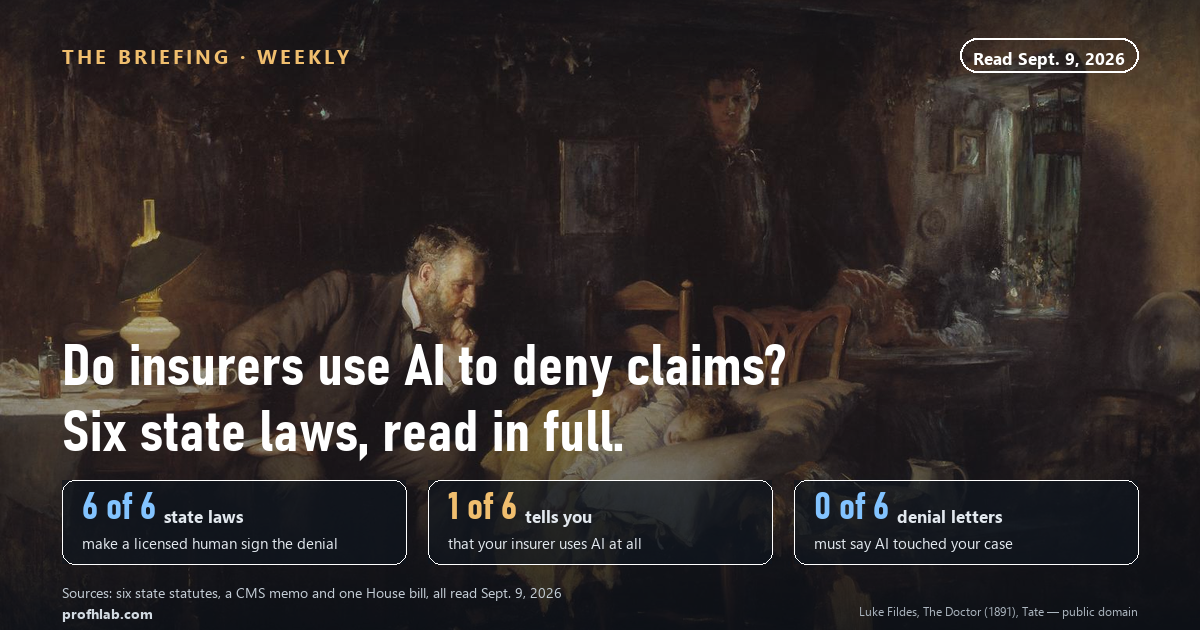
We read six state statutes on September 9, 2026. Six of six require a licensed human being to make a medical-necessity denial. One of six (Utah) requires the insurer to tell enrollees it uses AI at all. Zero of six require the denial letter in your mailbox to say whether AI touched your case. And in 2024, Medicare Advantage insurers denied 4.1 million prior-authorization requests; 11.5% were appealed, and 80.7% of those appeals were overturned.
What the six state laws actually say, word for word
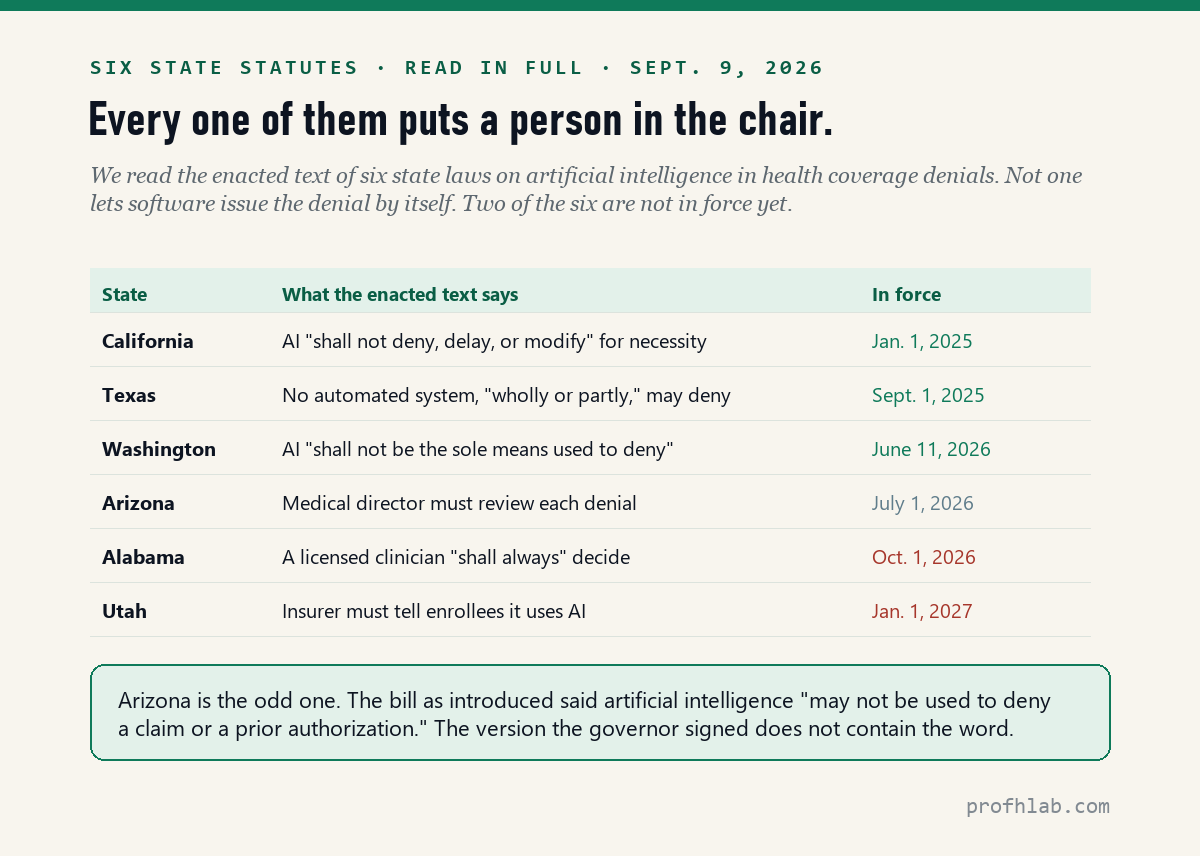
Six states now have enacted language governing software in coverage denials. We read each one in its final, signed form — not the press release, not the summary. Two of the six are not in force yet.
| State & law | The operative sentence | In force |
|---|---|---|
| California — SB 1120 (Becker), Health & Safety Code § 1367.01(k) | The tool “shall not deny, delay, or modify health care services based, in whole or in part, on medical necessity.” Necessity is decided “only by a licensed physician or a licensed health care professional.” | Jan. 1, 2025 |
| Texas — SB 815, Insurance Code § 4201.156 | “A utilization review agent may not use an automated decision system to make, wholly or partly, an adverse determination.” Fraud detection and admin support are still allowed. | Sept. 1, 2025 |
| Washington — E2SSB 5395, ch. 157, Laws of 2026 | “Artificial intelligence shall not be the sole means used to deny, delay, or modify health care services.” Algorithms may approve; they may not deny without human review. | June 11, 2026 |
| Arizona — HB 2175, ch. 165 (2025), A.R.S. §§ 20-3103, 20-3407 | The medical director “shall individually review the denial… exercise independent medical judgment and may not rely solely on recommendations from any other source.” | July 1, 2026 |
| Alabama — SB 63 (Orr), 2026 | A denial “shall always be made by a licensed physician or other health care professional who is competent to evaluate any recommendation or conclusion of artificial intelligence.” Annual certification to the department. | Oct. 1, 2026 |
| Utah — SB 319, Utah Code § 31A-22-650(3) | “An insurer shall disclose… to each enrollee if the insurer uses artificial intelligence in the insurer’s processes for reviewing an authorization request.” | Jan. 1, 2027 |
Enacted text read September 9, 2026. Texas applies to plans delivered, issued or renewed on or after January 1, 2026; two Washington sections start January 1, 2027.
Read together, they are less a ban on artificial intelligence than a rule about whose signature is on the bottom of the page. California’s list runs eleven items long — the tool must consider your own clinical history, must not decide from a group dataset alone, must not “supplant health care provider decisionmaking,” must be open to state audit — and then adds the flat prohibition anyway.
Texas took the shortest route: an automated decision system may not make an adverse determination “wholly or partly,” which is the only phrasing in the six that closes the obvious workaround of a human rubber stamp.
The Arizona law everyone cites does not contain the word “artificial”
This is the part we did not expect. Arizona’s HB 2175 was introduced in 2025 with a sentence that would have been the bluntest in the country, printed in the small capitals the legislature uses for new law: artificial intelligence may not be used to deny a claim or a prior authorization.
We searched the introduced version and the chaptered version for the word artificial. The introduced bill: one occurrence. The law the governor signed on May 12, 2025 as Chapter 165: zero. The sentence was gone by the time the Senate engrossed the bill, replaced by the requirement that a medical director individually review each denial and “not rely solely on recommendations from any other source.”
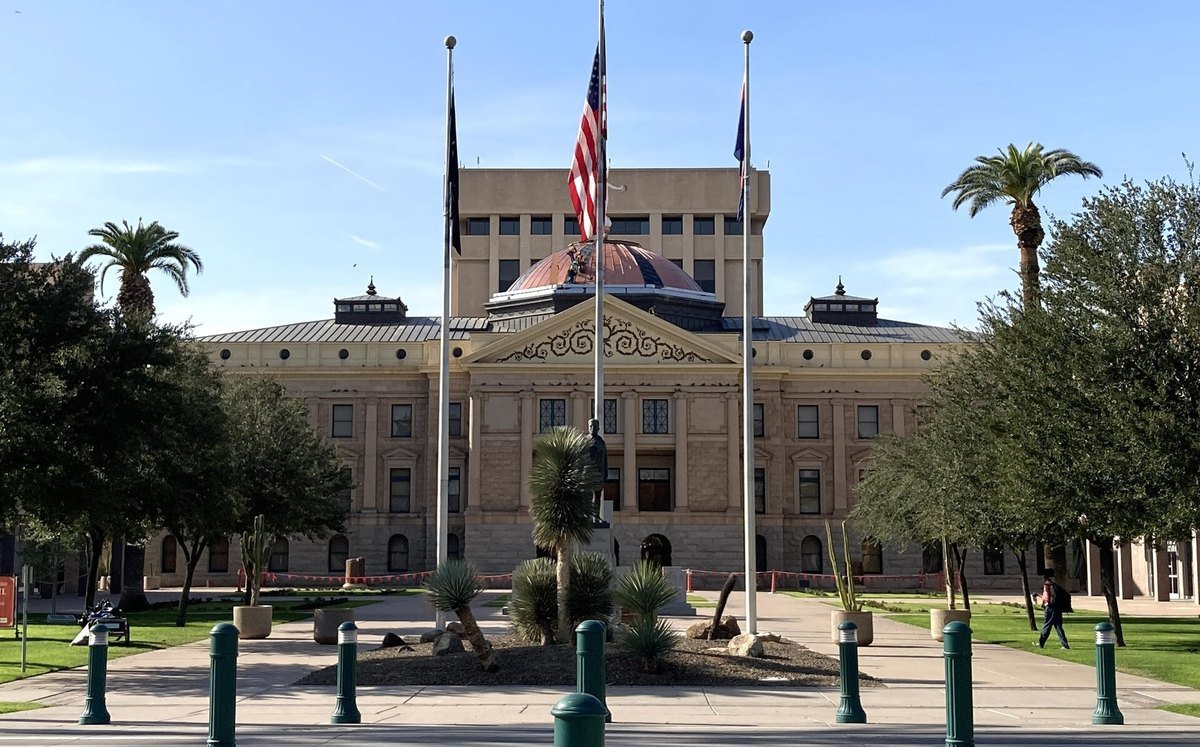
Be fair to the result: “any other source” covers a model’s output as surely as a named ban would, and the review duty attaches to every denial rather than to a technology that will be renamed in five years. But if you went looking for the Arizona law that bans AI in claim denials, you would not find it, because it is not there.
That gap between the headline and the statute is the reason we read the enacted text rather than the coverage — the same habit that turned up the missing rights when we scored page one on AI scribes in the exam room.
On Medicare, the federal government already answered this question
If you are on Medicare Advantage, no state AI law governs your denial. A memo from the Centers for Medicare & Medicaid Services dated February 6, 2024, addressed to all Medicare Advantage organizations, took the question head-on. Its answer is more permissive than most people assume, and more specific:
“An algorithm or software tool can be used to assist MA plans in making coverage determinations, but it is the responsibility of the MA organization to ensure that the algorithm or artificial intelligence complies with all applicable rules… including that the MA organization base the decision on the individual patient’s circumstances, so an algorithm that determines coverage based on a larger data set instead of the individual patient’s medical history, the physician’s recommendations, or clinical notes would not be compliant.”
— CMS, FAQ on CMS-4201-F, February 6, 2024
In plain English: the software may help. It may not decide from the crowd. Whether a prediction built on thousands of similar patients counts as “assisting” or “determining” is exactly the argument now running through the courts, and it is why the sentence matters more than any press statement. If prior authorization on Medicare is new to you, start with our walkthrough of which services now need it in Original Medicare.
Nobody has to tell you — and one bill would change that
Here is the finding that surprised us most, and the one we have not seen anywhere else. Across all six state laws, the disclosure obligations run to regulators, to policies-and-procedures manuals, to network providers, to the state insurance department. Utah is the only one that names the enrollee — and even Utah tells you that the insurer uses AI, not that AI touched your case. Not one of the six requires the words “an artificial intelligence system was used in this determination” to appear in the letter you actually receive.
H.R. 10210, the Doctors Not AI Act of 2026, would. Introduced on September 1, 2026 by Rep. Landsman with Reps. Carter, Schrier and Barrett, it amends the Public Health Service Act, ERISA and the tax code at once, and its notice provision is unusually concrete.
If AI was used, the denial notice would have to carry a statement that it was used, a description of its role in the review, and “the name, professional license, and credentials of the licensed health care professional who made the determination.” The model’s outputs and scores would become part of the administrative record, “made available to the enrollee upon request.”
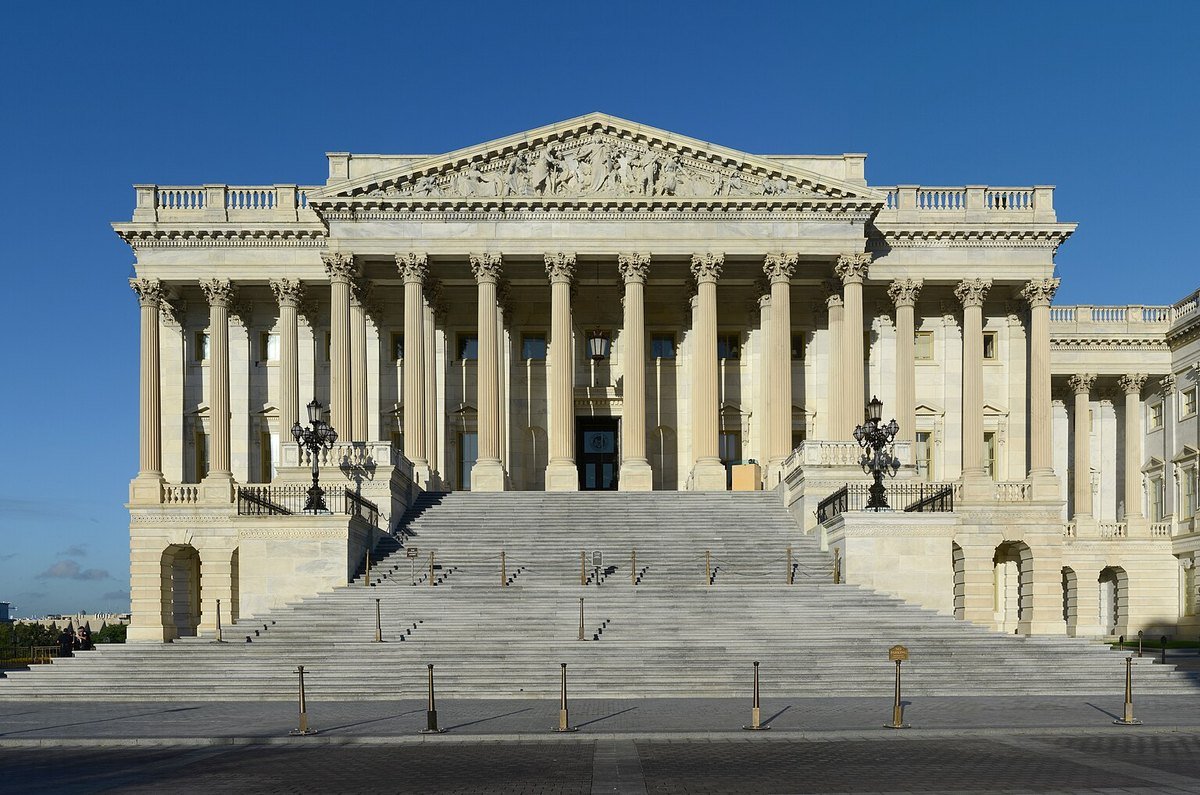
A bill referred to three committees in September of an election year is a long way from a law, and we are not predicting anything. We are telling you what the text says, because it is the clearest statement anyone in government has written of what the letter in your mailbox is currently allowed to leave out.
Whether any of this covers you depends on a question your card does not answer
State insurance law reaches insurance. It does not reach a health plan that your employer funds out of its own money and merely hires an insurance company to administer. In KFF’s 2025 employer survey, 67% of covered workers were in self-funded plans — 80% at large firms. For most people with job-based coverage, in other words, California’s rule and Washington’s rule are somebody else’s rules.
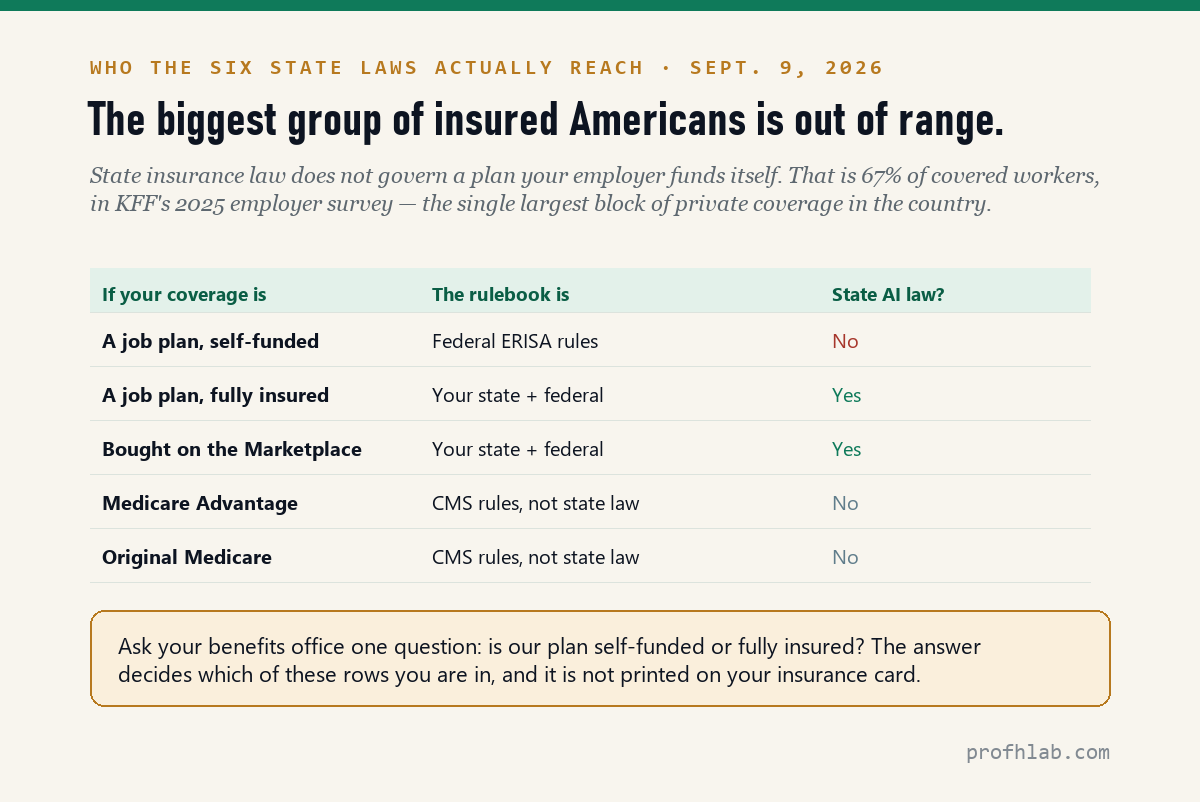
This is why the federal bill amends ERISA alongside the Public Health Service Act. It is also why the single most useful sentence you can say to your benefits office is not about AI at all: is our plan self-funded or fully insured? The answer decides which agency takes your complaint, and it is not printed on your insurance card. If you want practice getting a straight answer out of a large organization, we wrote the field guide: how to reach a human being at a company that would rather you did not.
The number that should change what you do tomorrow
Set the technology aside for a second and look at the outcome data, because it points somewhere uncomfortable. KFF’s January 28, 2026 analysis of federal filings found that Medicare Advantage insurers denied 4.1 million prior-authorization requests in 2024 — 7.7% of all requests. Of those denials, 11.5% were appealed. Of the appeals, 80.7% were partially or fully overturned.
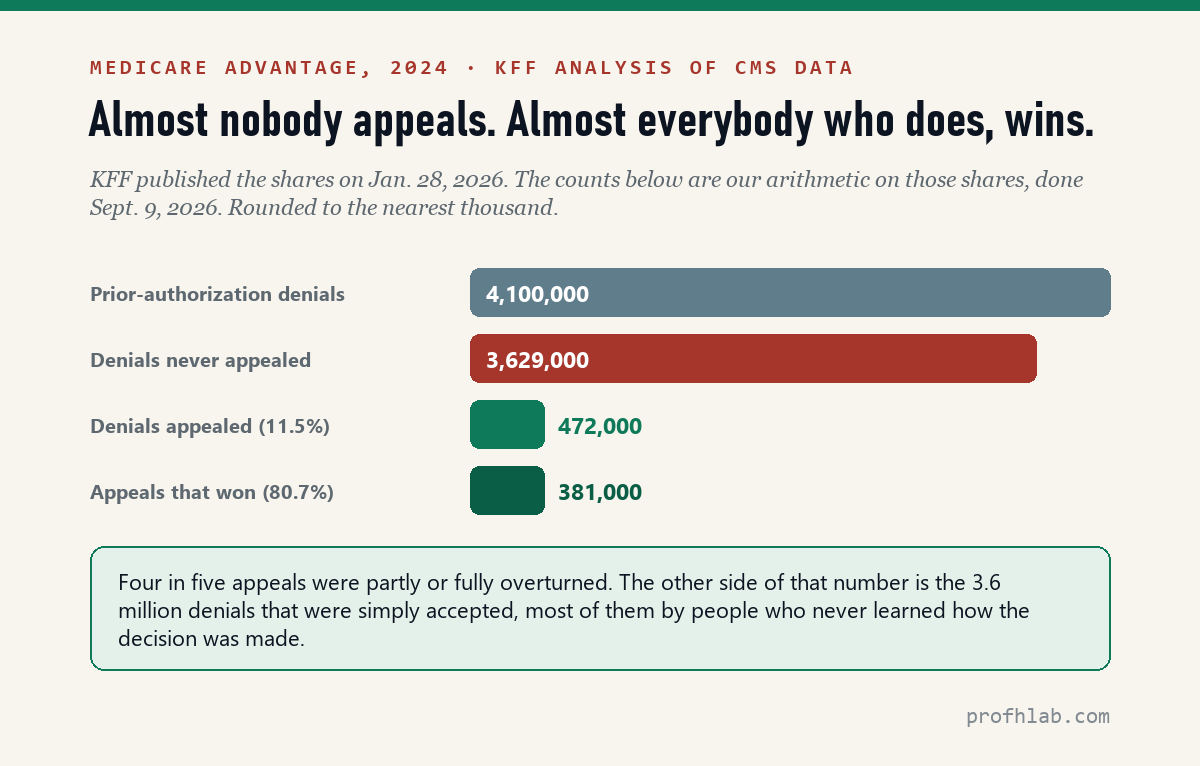
Multiply it out and the shape is brutal. About 472,000 denials were appealed and roughly 381,000 of those were reversed — while about 3,629,000 denials were simply accepted. Four out of five appeals succeed, and seven out of eight people never file one. Whatever role software played in generating those denials, the largest single failure in the system is the envelope that goes in the drawer.

One more honest complication, and it cuts against the laws themselves. In the federal Marketplace data for 2024, insurers denied 19% of in-network claims — but only 5% of those denials were for lack of medical necessity. Thirty-six percent were coded “Other,” and 25% were administrative. Every state law in the table above governs medical-necessity decisions. The bucket where most denials actually live is the bucket nobody legislated.
Two segments worth watching before you write your appeal
Ask in writing if an algorithm was used, and who made the call
- Get it in writing and find the reason. A denial has to state why. “Not medically necessary” and “administrative” send you down different roads — only the first is governed by the six laws above.
- Ask the two questions that create a record. In writing: Was an algorithm or artificial intelligence system used in this determination? and What is the name and license of the professional who made it? In California, the written denial sent to your provider must already carry the responsible professional’s name and a direct phone number or extension.
- Appeal inside the deadline. For Marketplace and most job-based plans: 180 days from the notice to file an internal appeal. The plan must decide within 30 days for care you have not received yet, 60 days for care already given, and 72 hours for urgent cases.
- Then go outside the company. External review must be requested within 4 months of the final denial; a standard review is decided within 45 days, an expedited one within 72 hours. For plans in the federal process, the request line is 1-888-866-6205. The reviewer is independent and the insurer no longer gets the last word.
- On Medicare, use the plan’s own instructions. Medicare.gov is explicit that the plan “must tell you, in writing, how to appeal.” General help is 1-800-MEDICARE. If a case ever reaches federal court, the 2026 minimum amount in controversy is $1,960.
- Ask HR the boring question. Self-funded or fully insured? Fully insured means your state insurance department can take the complaint. Self-funded means the Department of Labor, and no state AI law applies.
A chatbot will invent a policy citation if you let it
Does an AI-written appeal help? Nothing in these rules stops you from using one to organize your own facts, and the PBS segment above follows people who did. Two cautions from our own testing: a chatbot will invent a policy citation if you let it, and you should never paste more of your chart than the appeal needs — see what actually happens to medical records you upload and how to make it write a complaint letter that sounds like you.
What about the calls that arrive right after a denial? Medicare’s open enrollment starts October 15, and September is when the impersonation calls begin. The tells have changed this year: read why the pause test no longer works, then our September scam roundup and the safe-word method in AI scams targeting seniors.
Where else is pricing software deciding what you pay? The same class of tool now sets what an item costs depending on who is looking at it — we covered the FTC’s own naming of names in is it illegal to charge different prices for the same product, and the version that shows up on your utility bill in is my electric bill going up because of AI.
Who denies the most claims, and what to do after a rejection
Do health insurance companies use AI to deny claims?
Yes, in the sense that algorithms and AI systems are used throughout utilization review — sorting, scoring, flagging and drafting. What is regulated is the final call. Six state laws we read on September 9, 2026 require a licensed human to make a medical-necessity denial, and CMS says a Medicare Advantage plan may use software to assist but must base the decision on the individual patient’s circumstances.
Is AI denying your insurance claim?
You are not currently entitled to know, and that is the honest answer. Utah’s law, effective January 1, 2027, is the only one of the six that requires an insurer to tell enrollees it uses AI at all, and even that is about the insurer’s process rather than your file. H.R. 10210 would require the notice itself to say so, name the reviewer, and put the model’s output in the record. It was introduced on September 1, 2026 and is not law.
Why do health insurance companies deny claims?
Less often than you would think for the reason people assume. In the 2024 federal Marketplace data, 36% of in-network denials were coded “Other,” 25% were administrative, 9% were for a missing prior authorization or referral, and only 5% were for lack of medical necessity. Paperwork is the bigger enemy, which is also why so many appeals succeed.
Which health insurance company denies the most claims?
The federal file reports it insurer by insurer for Marketplace plans, and the spread is enormous: in-network denial rates ran from 3% to 36% in 2024, and 3% of reporting insurers denied 30% or more. There is no single national villain in the data, which is why the useful question is not who is worst but what your own plan’s letter says and how fast you appeal it.
Is it illegal for insurance companies to deny claims?
No. Denying a claim is a normal, lawful act, and coverage limits exist in every policy. What the law regulates is the how: who is qualified to decide, what they must look at, how fast they must answer, and what the notice must contain. That is the entire subject of the six statutes above.
What to do if an insurance claim is rejected
File the internal appeal within 180 days, ask in writing whether an automated system was involved and who signed off, and if the answer is still no, request an independent external review within 4 months of the final denial — 45 days for a standard decision, 72 hours if it is urgent, and 1-888-866-6205 for plans in the federal process. On Medicare, follow the plan’s written appeal instructions and call 1-800-MEDICARE for help.
Does Medicare Advantage use AI for prior authorization?
Plans may use algorithms and AI to assist, under the CMS memo of February 6, 2024, but a determination built on a larger data set instead of your own history and your physician’s recommendation “would not be compliant.” State AI laws do not apply to Medicare Advantage. The volume is the thing to hold on to: 4.1 million denials in 2024, and four in five appeals overturned.
Sources
- California SB 1120 (Becker), approved September 28, 2024 — Health & Safety Code § 1367.01(k), enacted text
- Texas SB 815, 89th Legislature — Insurance Code § 4201.156, enrolled text
- Washington E2SSB 5395, Chapter 157, Laws of 2026 — session law as signed
- Arizona HB 2175 — bill as introduced and Chapter 165 as signed, May 12, 2025
- Alabama SB 63 (Orr) — enrolled act, effective October 1, 2026
- Utah SB 319 — enrolled copy, Utah Code § 31A-22-650
- CMS, February 6, 2024 — FAQ on coverage criteria and utilization management (CMS-4201-F)
- H.R. 10210, Doctors Not AI Act of 2026, introduced September 1, 2026 — bill text, U.S. Government Publishing Office
- KFF, January 28, 2026 — Medicare Advantage prior authorization determinations in 2024
- KFF, March 24, 2026 — Claims denials and appeals in ACA Marketplace plans in 2024
- KFF, 2025 Employer Health Benefits Survey — plan funding, 67% of covered workers self-funded
- HealthCare.gov — internal appeals and external review; Medicare.gov — filing an appeal
All twelve documents were fetched and read on September 9, 2026. Counts of the word “artificial” in the Arizona versions, and the appeal arithmetic on KFF’s published shares, are ours. This is general information, not medical, legal or financial advice.
Prior authorization in Original Medicare, and your recorded visit
- Does Original Medicare require prior authorization? In six states, 39 codes now do
- Why is my doctor recording my appointment? We scored page one
- Your 2027 Social Security raise, and what Medicare takes back
- How to prep for a doctor visit with ChatGPT
- How do I get rid of AI on my phone? Twelve places, one real off switch
- Are deleted ChatGPT chats really deleted?
- How to tell if a picture is AI generated: three checks that beat your eyes
- The best AI tools for seniors in 2026
- How to use ChatGPT: a step-by-step guide for beginners over 50
- More of this series: The Briefing · Start here · FAQ · How we count · Ask a question · AI Jobs Tracker
About the author. Prof. H teaches robotics and AI and writes The Briefing, a weekly read on what AI is doing to ordinary bills, benefits and rights. Every document in this piece was fetched and read on the date shown. Corrections and questions: ask here.
Prof.’s H Newsletter
One short email a month, with the numbers in it
What actually moved in AI hiring, AI prices, and the scams aimed at older Americans. Counted here, dated, and linked to the source. One email a month, and your address goes nowhere else.