How to Tell If a Video Is AI on YouTube: 43 of 67 AI Videos We Checked Had No Label
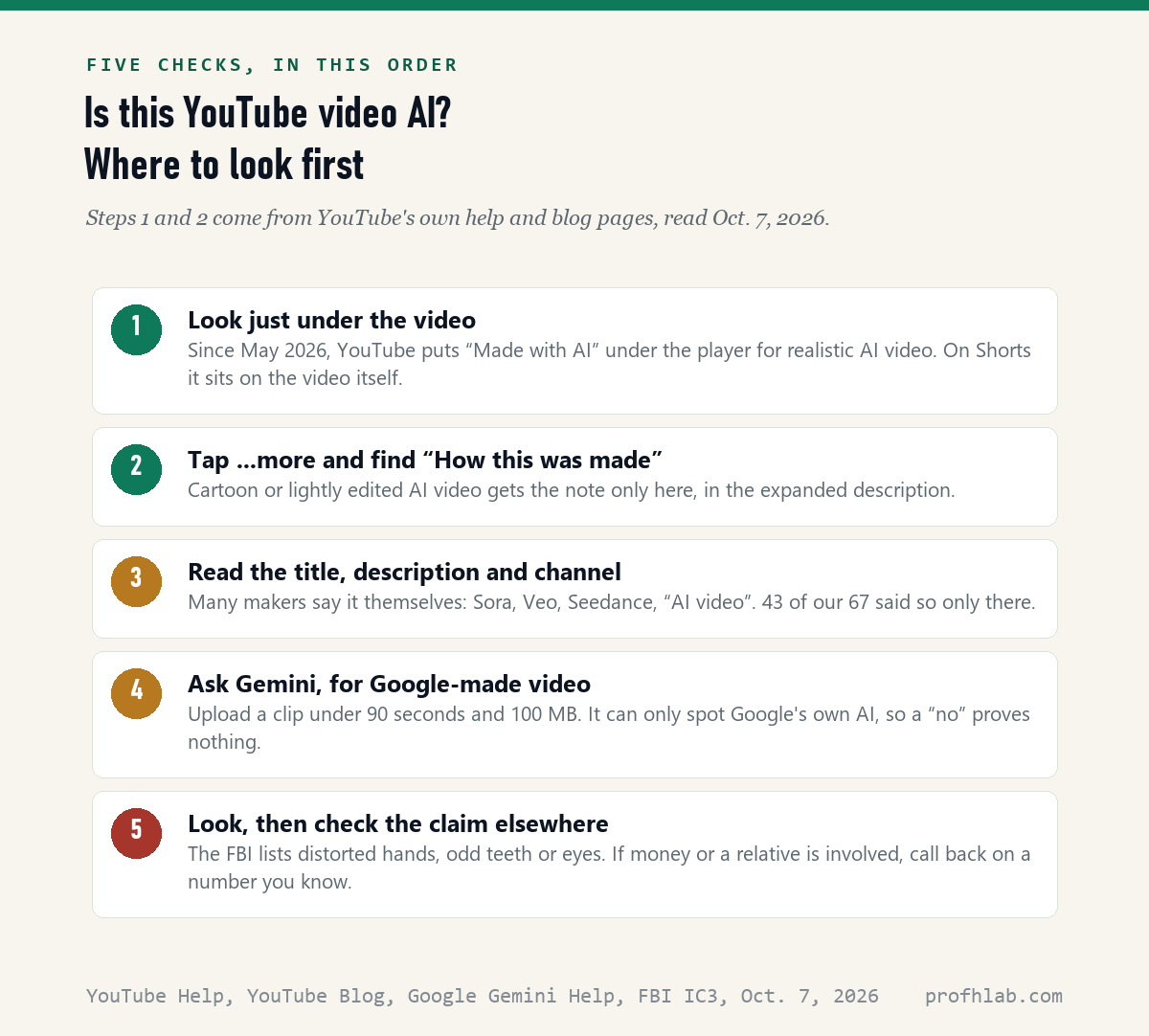
Look for the words “Made with AI” under the video, but do not trust a missing label: on October 7, 2026 we checked 67 YouTube videos whose own titles say they were made with AI, and 43 of them carried no AI label at all. Only 24 showed YouTube’s label. So the label is a good first clue, but it is not a verdict.
If a video fooled you, you are in good company. Some of these clips are made to look like home videos. Below are the five checks that work, in the order to try them, and what each one can and cannot tell you.
What we checked on October 7, 2026
We ran 11 YouTube searches, such as “sora 2 compilation” and “veo 3 short film,” and opened 125 video pages while logged out, with US English settings. In each page’s own code we read the “How this was made” section, where YouTube’s AI label lives. From the 125 we kept the 67 videos whose titles say the footage itself was made with AI. We left out tutorials, news reports and side-by-side tool tests.
We did not watch all 67, and we did not judge which ones look realistic. YouTube only requires a label for realistic AI video, so this count shows what a viewer sees, not who broke a rule. Our reader ran from outside the United States; labels may differ by country or app.
Written and checked by Prof. H. An AI assistant helped draft this article and ran the page reads; every quotation below was read on the source’s own page on the date shown.
How do you tell if a video is AI on YouTube?
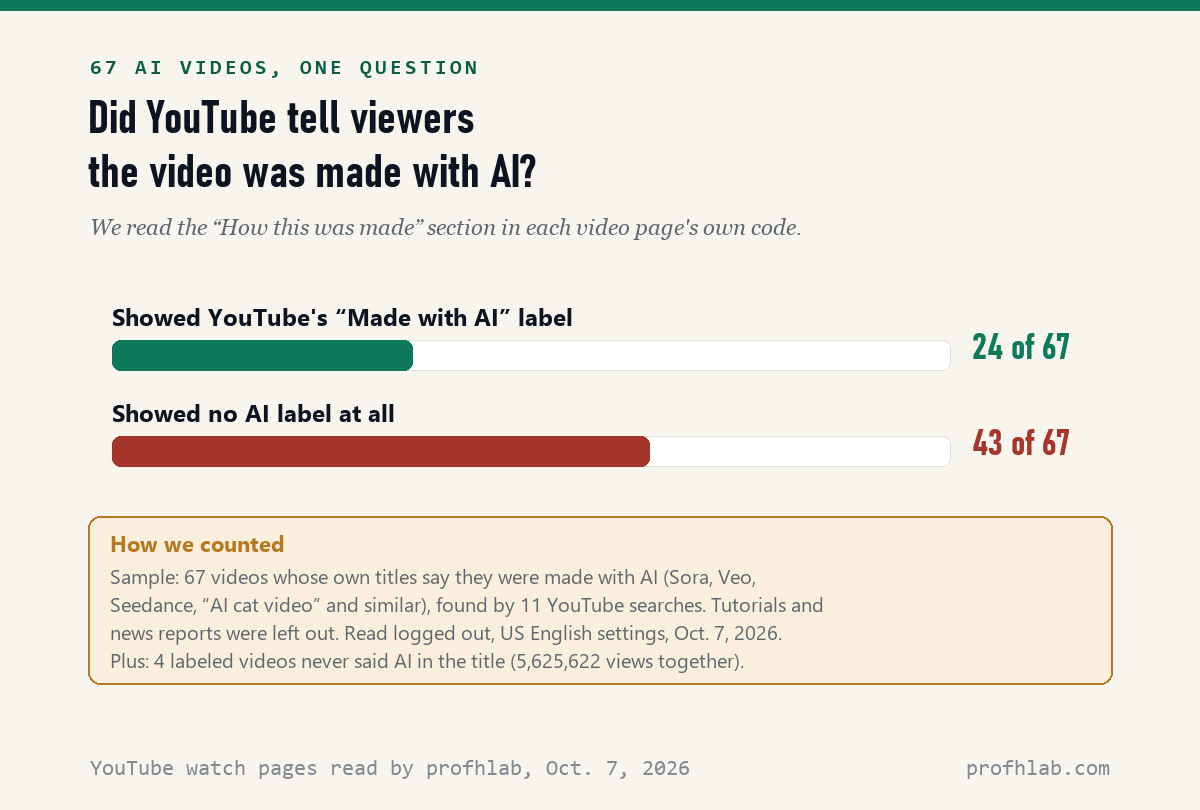
Start with YouTube’s own label, then read what the maker says, then test the claim: YouTube’s blog post of May 27, 2026 says realistic AI video now gets a label “directly below the video player, above the description.” On Shorts, the same post says, the label appears “as an overlay on the video itself.”
The label reads Made with AI. YouTube’s help page “Understanding ‘How this content was made’ disclosures,” read October 7, 2026, says it means a video “contains content that has been meaningfully altered or synthetically generated.” On the video pages we read, the line under it said: “Sounds or visuals were altered or fully generated.”
Think of the label like a “contains nuts” sticker on a cookie. When it is there, believe it. When it is missing, the cookie may still have nuts, because someone has to put the sticker on.
We checked 67 AI videos, and 43 had no label
Of the 67 YouTube videos we read on October 7, 2026 whose titles say they were made with AI, 24 carried the Made with AI label and 43 carried none. The unlabeled 43 had 6,557,288 views between them when we checked. The labeled 24 had 6,066,931.
Three of the unlabeled videos came from the AI makers themselves. Two are OpenAI’s own launch videos for its Sora 2 video tool, “This is Sora 2” (843,500 views) and “Sound on for Sora 2” (551,451 views). The third is Google Workspace’s “Video created with Google’s Veo 3!” (88,876 views). Their titles tell you plainly. The label did not.
Twelve of the 43 did have a “How this was made” section, but it only said the video was Auto-dubbed, meaning YouTube made voice tracks in other languages. That note is about the sound in other languages, not the pictures. So finding the section is not the same as finding an AI label; read the bold heading in it.
Why would an AI video on YouTube have no label?
Because YouTube only requires a label when AI video looks real, and its automatic detection is new: its help page “Disclosing use of GenAI content,” read October 7, 2026, asks creators to disclose AI use “when it appears realistic.” The same page lists things that need no label, such as “Applying beauty filters.”
Many of our 67 were cartoon parodies and fantasy scenes. For those, YouTube’s May 27, 2026 post says the note belongs in the expanded description, not under the player. Our count read that description section and also searched the rest of each page’s code for the label words. Some of the 43 may simply be videos YouTube does not think need a label. That is our inference; YouTube did not tell us why any single video was unlabeled.
The May 27 post also says YouTube is “rolling out new internal signals” and will “automatically apply a label” when its systems detect “significant photorealistic AI use.” Rolling out means not finished. A creator can also dispute a label in YouTube Studio, the post says, except in a few cases, such as videos made with YouTube’s own AI tools.
The label can be the only clue: 4 labeled videos never said AI
The label works best on the videos that hide what they are: in our October 7, 2026 read, 4 videos with the Made with AI label never mentioned AI in their titles. Together they had 5,625,622 views. All four are animal or baby clips, such as a ginger kitten touring Japan with a mother cat.
Nothing in those titles would warn a grandparent sharing them with a grandchild. Only the label says the scenes were generated. So open the description before you forward a video, even a harmless-looking one.
None of the 125 pages we read showed YouTube’s other note, “Captured with a camera,” which marks footage with camera proof built in. YouTube’s help page on it says, “If it’s missing, it doesn’t mean the content has modified audio or visuals.” So its absence tells you nothing either way.
Here is how to open “How this was made” on your phone, TV or computer
The note sits in the expanded description, which YouTube’s “How this content was made” help page names as the place for these disclosures (read October 7, 2026). The steps below describe YouTube’s usual description layout; we did not film them on every device.
- Start the video. Look right under the player for Made with AI. On a Short, look on the video itself.
- Tap the description under the title, or the word …more.
- Scroll down to How this was made. Read the bold heading: Made with AI is the AI label; Auto-dubbed is only about other-language sound.
- No section at all? Then YouTube shows no note for that video. Go on to the next check.
On a TV, the description is harder to reach. If a video worries you, look it up again on a phone.
Can Gemini or any app tell me if a video is AI?
Only partly: Google’s Gemini help page “Verify AI-generated images, videos, and audio,” read October 7, 2026, says “Gemini can currently only recognize content created by Google AI tools.” It reads a hidden Google watermark called SynthID. A clip from another company’s tool will not show up.
To try it, sign in to the Gemini app, upload the clip and ask, “Is this AI-generated?” The page says a video must be “less than 90 seconds” and 100 MB or less. If Gemini finds no watermark, the page warns the video “could have been created by other AI systems.”
So a “yes” from Gemini is strong. A “no” only means “not made with Google’s tools.” We did not test outside detector websites for this article, so we make no claim about them.
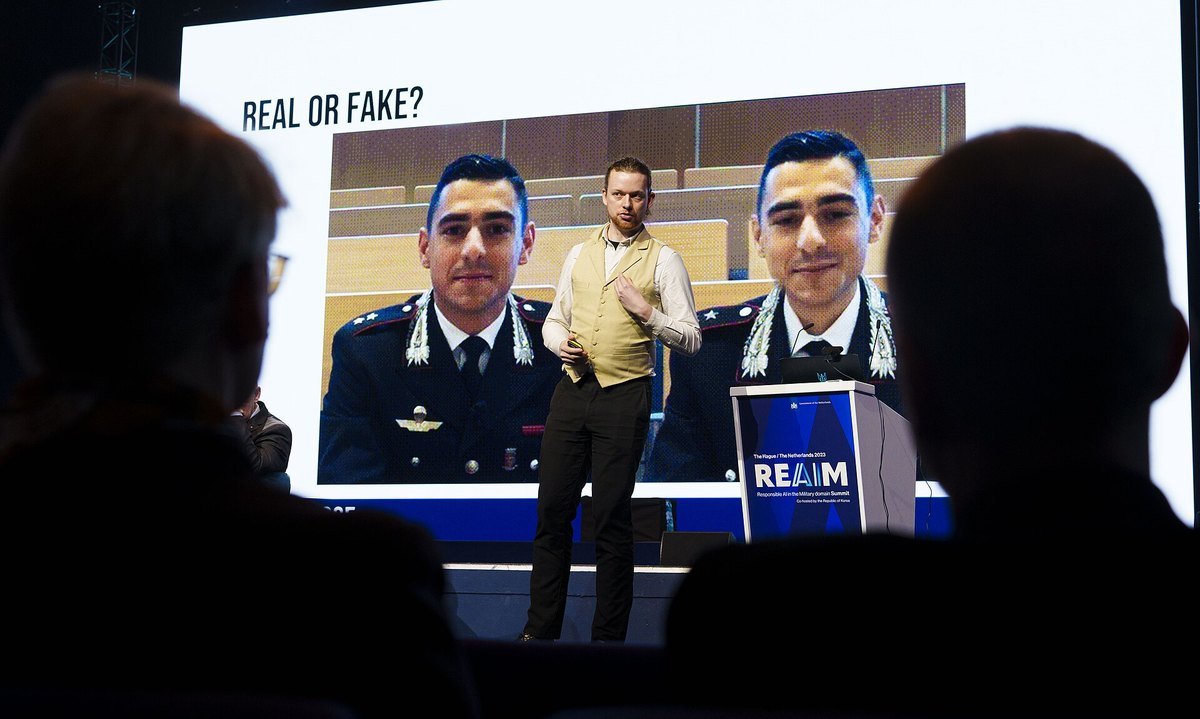
What does the FBI say to look for in a fake video?
The FBI’s public service announcement of December 3, 2024 warns that “Criminals use AI-generated videos to create believable depictions of public figures” to support fraud. It tells people to look for “distorted hands or feet, unrealistic teeth or eyes” and odd shadows.
Those clues help, but newer tools make fewer mistakes. A safer habit is to check the claim, not just the picture. If a video shows a famous person selling an investment, find the same news on a site you already trust. If it shows a relative in trouble, hang up and call them back on the number you know.
The same FBI notice says to “Create a secret word or phrase with your family.” Our family safe word guide has examples that are easy to remember.
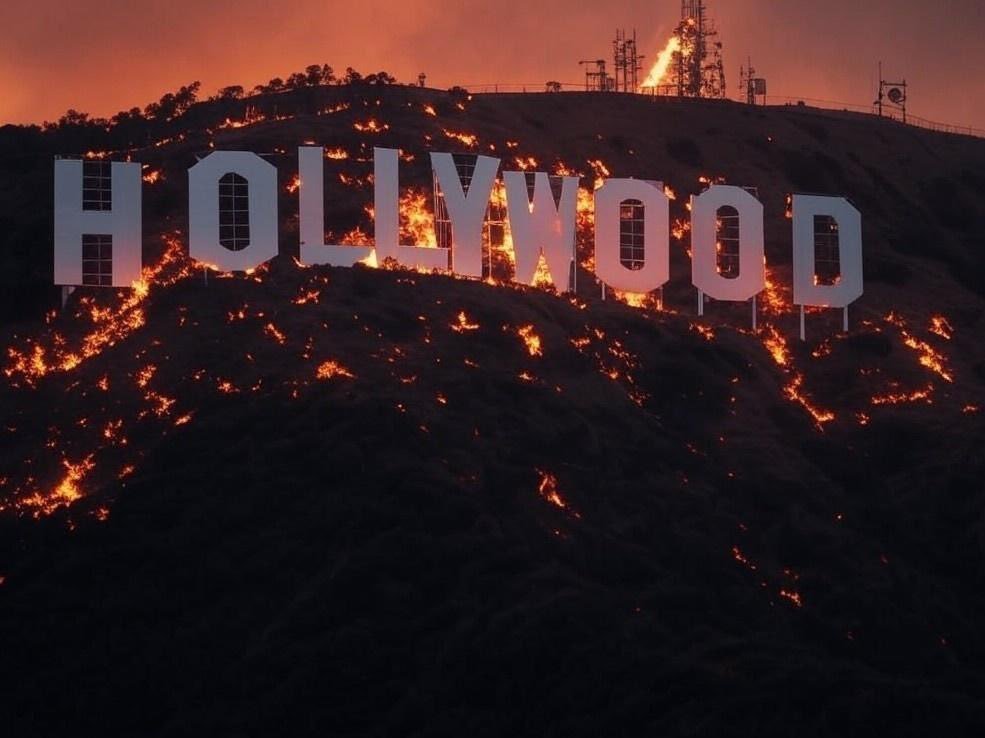
A TV news segment and a lab explainer on spotting and watermarking AI
Shorts, Facebook, reporting and other questions about AI video
Does YouTube label AI videos?
Yes, when the AI video looks realistic or was made with YouTube tools. The label reads Made with AI. In our October 7, 2026 check, 24 of 67 AI-titled videos carried it, so many AI videos still show no label.
How do I tell if a YouTube Short is AI?
Look for Made with AI on the Short itself; YouTube said on May 27, 2026 the label appears as an overlay there. Then open the description and check How this was made, the title and the channel name.
Is there an app to tell if a video is AI generated?
The Gemini app can check videos under 90 seconds, but Google says it only recognizes content made with Google AI tools. A no from Gemini does not mean the video is real.
How do I report a fake AI video on YouTube?
Below the video, tap More, then Report. If the video uses your own face or voice, YouTube help says you can ask for removal through its privacy complaint process.
Does Facebook label AI videos?
Meta says it shows an AI info label on Facebook and Instagram when it detects industry signals or the poster discloses AI. For posts only edited with AI, Meta moved the label into the post menu, so check there too.
Scam ads, phone calls and fake emails use the same tricks
AI video is one piece of a bigger pattern. Read AI scams aimed at seniors, our AI scam watch for September 2026, why scam ads keep showing up on YouTube and what happens if you say yes on a scam call.
For voices and text, see how to tell if a phone call is AI and how to tell if an email was written by AI. The Auto-dubbed note is explained in how to turn off auto-dubbing on YouTube.
Other screens have AI switches too: Facebook, Instagram, your TV, Google Photos, Gemini on Android and Google Search. Before you paste anything into a chatbot, read what is safe to give ChatGPT.
New here? Start at Start Here, try ChatGPT for the first time after 50, see the AI tools we rate for seniors, or send a question on the Ask page. How we count is at How We Count.
YouTube, Google, FBI and Meta pages we read on October 7
- YouTube Blog, Improving AI labels for viewers and creators, published May 27, 2026. Read October 7, 2026.
- YouTube Blog, How we’re helping creators disclose altered or synthetic content, published March 18, 2024. Read October 7, 2026.
- YouTube Help, Disclosing use of GenAI content; Understanding “How this content was made” disclosures; Building trust on YouTube: ‘Captured with a camera’ disclosure; Protecting your identity; Report inappropriate videos, channels & other content on YouTube. No dates shown; read October 7, 2026.
- Google Gemini Help, Verify AI-generated images, videos, and audio. No date shown; read October 7, 2026.
- FBI Internet Crime Complaint Center, public service announcement I-120324-PSA, December 3, 2024. Read October 7, 2026.
- Meta, Our approach to labeling AI-generated content and manipulated media, first published April 5, 2024, with updates through September 12, 2024. Read October 7, 2026.
- YouTube watch pages: 125 pages from 11 searches, read logged out with US English settings, October 7, 2026. View counts are as of that day.
Labels and menus on YouTube change often, and they may look different by country, app and device. This page reports what we saw and read on the date shown. Corrections and questions go to the Ask page.
Prof.’s H Newsletter
One short email a month, with the numbers in it
What actually moved in AI hiring, AI prices, and the scams aimed at older Americans. Counted here, dated, and linked to the source. One email a month, and your address goes nowhere else.